Log in
 Free Trial
 karina
  Updated on May 19, 2026
  1442 views
  4
4

Finding stable housing after military service is still a major challenge for many veterans across the United States. According to the U.S. Department of Housing and Urban Development (HUD), thousands of veterans experience homelessness on a given night each year, despite ongoing federal housing programs and support services.
This article explains how landlords and property managers can help veterans through housing programs like HUD-VASH and Supportive Services for Veteran Families (SSVF) in 2026 and beyond. Beyond simply offering a rental unit, landlords can play an important role in helping veterans access stable housing, avoid eviction, and rebuild financial security. At the same time, these programs can provide rental stability and consistent payments for property owners as well.
TL;DR: Quick Summary
- HUD-VASH helps veterans access housing vouchers and support services.
- SSVF programs help prevent veteran homelessness and housing instability.
- Landlords can receive reliable rent payments through veteran housing programs.
- Renting to veterans does not automatically mean accepting lower rent.
- Veteran support programs often include financial counseling and case management.
- Property managers can help struggling veteran tenants avoid eviction.
👉Support veterans while streamlining your property management. Start your 30-day free trial of our inclusive software now.
What is the state of homelessness among military veterans?
A survey by the US Department of Veterans Affairs (VA) showed that as of January 2012, there were at least 62,619 homeless veterans. That number is expected to rise as the nation continues to deploy military personnel across the globe. Thirteen percent of all the homeless adults in the US today are veterans. To put that into perspective, veterans on the whole account for only 7% of our overall population.
This number is just unbelievable, but sadly, true. As mentioned before, there are some resources that rental providers have access to that can help. If you are a landlord or a property manager, consider getting involved in any of our nation’s most important housing programs. There are quite a few of these for veterans, both at the State and Federal levels. These programs have come to the aid of tens of thousands of veterans and their families to help them lead independent lives with stable homes.

What is the HUD-VASH Program?
The HUD-VASH program is a collaborative effort between the US Department of Housing and Urban Development (HUD) and the US Department of Veterans Affairs, as well as a number of local housing authorities. Otherwise known as VA Supportive Housing, military veterans with very low income can receive a Section 8 voucher, as well as supportive case management and other services.
If you are interested in the various programs for veterans, you can visit the US Department Of Veterans Affairs website for more information.
What is the Supportive Services for Veteran Families Program?
Back in September 2012, the Department of Veterans Affairs first initiated another program called Supportive Services for Veteran Families, or SSVF. This program is specifically designed to help find homes for low-income or homeless veterans.
In its inaugural run, the program received a full year of funding for 85 nonprofit organizations and consumer cooperatives across the nation. These supportive services grants helped many veterans and their families not only to find employment, but also to find more suitable homes. Grantees primarily consisted of very low-income veteran families transitioning to permanent and more stable housing.
How You Can Help
Though these programs are rightfully geared towards helping our veterans, it does offer a number of benefits for rental providers as well. As landlords or property managers, this is your unique opportunity to give back to those who have served the country while receiving reliable income.
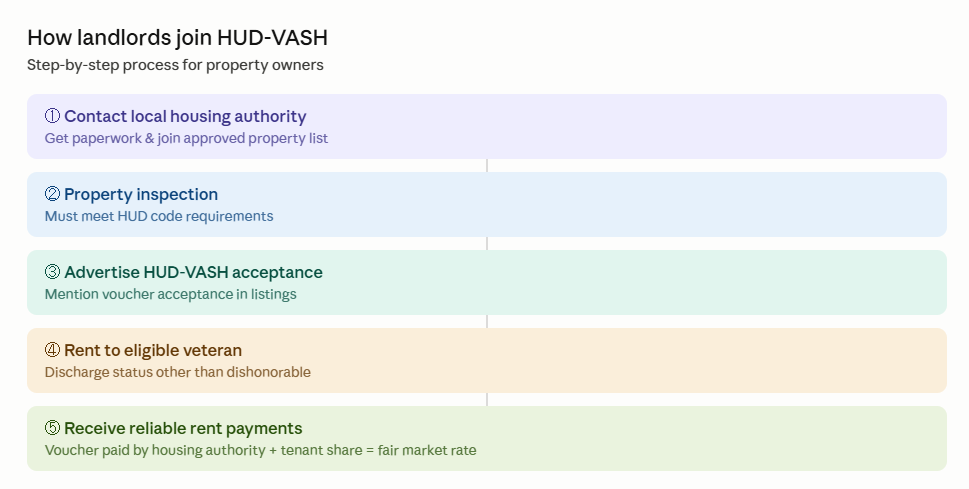
Your first step would be to sign up for the HUD-Veterans Affairs Supportive Housing (HUD-VASH) program. Here’s how to go about the process:
Get ahold of your local public housing authority. They will have all the information and the paperwork. From there, you can get on the list of approved properties.
Get your rental home inspected. Like any HUD program, your property will need to be up to code.
When promoting your property, always be sure to mention that you do participate in the program and accept HUD VASH vouchers.
It’s really a win-win situation for both parties. The landlord gets a portion of the rent payment on time, since housing vouchers are automatically paid by the public housing authority. The veteran-tenant also works with a support team from the Veterans Administration on everything regarding their tenancy requirements.
Does renting to veterans mean receiving lower rent?
One thing landlords and property managers must also be assured of is that they won’t be getting lower rentals when renting out to veterans. The combined total of a housing voucher and the tenant share usually matches that of current fair market rental rates.
It’s important to understand the services that the program offers veterans and which tenants you have that may qualify. The goal of Supportive Services for Veteran Families is to help by offering a 90-day case management plan which usually includes financial planning, temporary financial assistance (if needed), and housing counseling.
With the economy continuing to be a bit uncertain, it’s vital to understand where these supportive services can help. If you have veteran tenants who are struggling and falling behind with their rental payments, you can point them in the right direction so they become familiar with what the HUD VASH or SSVF can provide.
For landlords and property managers, this means avoiding the eviction process, but for these veterans, it means avoiding homelessness. Just to give you an insight, as of 2022, these programs have helped nearly a million veterans find permanent homes or prevented them from losing their existing homes.

Who are eligible?
Eligibility requirements are typically the same across the board, though some agencies may have other guidelines. It is always best to check with your local groups.

In order for tenants to qualify, usually participants must have a discharge status other than dishonorable. Income guidelines may also vary by location. Some locations do require that a veteran have dependents while others do not, and there are a number of locations nationwide to help.
Helpful Links:
- If one of your tenants is a struggling veteran, you can help them find your local agency by visiting the VA Homeless Programs for Veterans.
- For landlords and property managers needing more information regarding these programs, you can visit the VA Homeless Programs for Landlords.
FAQs
1. What is the HUD-VASH program?
HUD-VASH is a housing assistance program created through a partnership between HUD and the Department of Veterans Affairs. It combines Section 8 housing vouchers with supportive services and case management to help low-income or homeless veterans find stable long-term housing while receiving ongoing assistance from VA support teams.
2. Can landlords accept HUD-VASH vouchers?
Yes. Landlords and property managers can participate in the HUD-VASH program by working with their local housing authority and meeting property inspection requirements. Once approved, they can rent units to eligible veterans while receiving a portion of rent payments directly through the housing assistance program.
3. Do landlords receive lower rent when renting to veterans?
No. In many cases, the combined amount paid through housing vouchers and the tenant’s contribution matches local fair market rental rates. Programs like HUD-VASH are designed to support veterans without significantly reducing rental income for landlords or property owners participating in the program.
4. What is the SSVF program for veterans?
The Supportive Services for Veteran Families (SSVF) program helps low-income veteran families secure stable housing and avoid homelessness. The program may provide temporary financial assistance, housing counseling, employment support, and case management services to help veterans maintain long-term housing stability.
5. How can property managers support struggling veteran tenants?
Property managers can help by informing tenants about available veteran housing programs, directing them toward local VA resources, and encouraging early communication about financial difficulties. In some situations, these support programs can help prevent missed payments, evictions, and long-term housing instability.
6. Who qualifies for veteran housing assistance programs?
Eligibility requirements vary by location and program, but most programs require applicants to be military veterans with a discharge status other than dishonorable. Income limits, family size, and housing status may also affect eligibility depending on local housing authority guidelines and VA program rules.
Authors