Log in
 Free Trial
 karina
  12925 views
  93
93
Renting out to seniors and disabled tenants often requires a little more attention, but it also creates an opportunity to build longer, more stable rental relationships. Many older renters and tenants with disabilities are not looking for luxury, they’re looking for comfort, accessibility, safety, and a place where daily life feels manageable.
Small details like better lighting, easier access, quieter spaces, or flexible accommodations can make a huge difference. For landlords and property managers, understanding fair housing rules and disability-related responsibilities is important from both a legal and practical standpoint.
Laws like the Americans with Disabilities Act (ADA) and Fair Housing Act place clear limits on discrimination while also outlining what counts as a reasonable accommodation or modification. This guide explains what landlords should know before renting to seniors and disabled tenants.
👉 Tap into the growing senior rental market! Optimize your property management for all age groups with RentPost. Start your free trial now.
TL;DR: What You Need to Know
- Senior-friendly rentals often benefit from longer tenant retention and lower turnover.
- Seniors and disabled tenants may require accessibility-focused housing features.
- Landlords must follow ADA and Fair Housing rules when handling accommodations.
- Reasonable accommodations can include parking access, ramps, or service animal approval.
- Tenants usually pay for structural modifications unless federally assisted housing applies.
What is Senior Housing?
When most people think of senior housing, they have a pretty negative impression of assisted living facilities. For this reason, housing that can accommodate seniors is needed, which is suitable for landlords since not everyone needs a full-on facility.
As a matter of fact, there’s a growing movement towards apartment living with a twist: having people on hand and specialized accommodations that make it possible for seniors to live safely still while maintaining independence.
You should know, however, that this is a highly competitive market and one you cannot afford to attempt a half-hearted entrance into. For those complexes that have made the switch, occupancy rates tend to stay right at 90-93%.
And usually, when one complex begins to succeed in any given city, more spring up all around. What is the best way to compete in this market? Offer amenities others do not and make sure they’re exclusive to your community.
Another option if you’re not looking to go full-on, exclusive senior assisted living—multigenerational housing. While many seniors opt for the exclusive settings, many still prefer the ability to mix with other residents who are not seniors. This setting typically involves recreational activities, a dining area, and other amenities that can appeal to all ages.
If you’d like to know more about what you can do to make your apartment complex or properties more senior accessible, your first step is going to your local senior living association. The National Center For Assisted Living website can also find more information.
Landlord Responsibilities for the Disabled
The best property managers know how to provide exemplary service to all tenants, regardless of particular circumstances. With senior housing on the rise and an aging Baby Boomer population turning to rentals, property managers should be well-versed in the laws regarding housing for people with disabilities.
The Americans with Disabilities Act (ADA) became the law of the land in 1990. The ADA is an extensive legislation that “prohibits discrimination against individuals with disabilities in all areas of public life, including jobs, schools, transportation, and all public and private places that are open to the general public.” Housing policies are covered under the ADA, so attentive landlords should be aware of their legal responsibilities towards seniors and the disabled tenants.
Who is considered disabled?
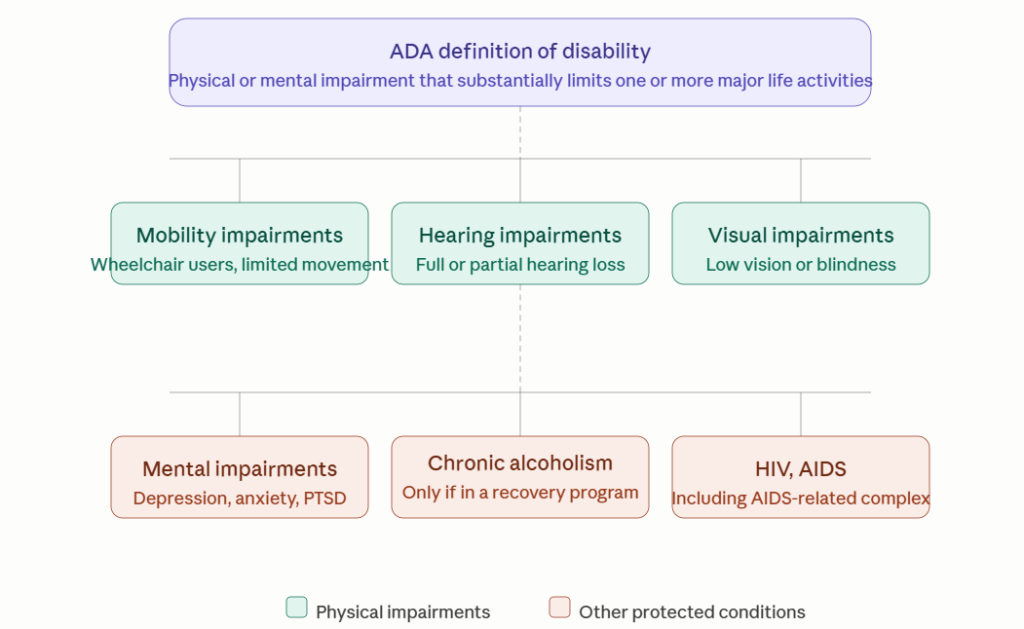
Under the ADA, landlords are prohibited from inquiring about the exact nature of a person’s disability even if the disability is highly visible, like for example if the prospective tenant uses a wheelchair. However, the ADA addresses what is legally considered a disability in clear, concise language. To be covered under the ADA, “a person must have a physical or mental disability that substantially limits one or more major life activities.” A partial list of protected disabilities includes:
- Mobility impairments
- Hearing impairments
- Visual impairments
- Mental impairments
- Chronic alcoholism (if it is being addressed through a recovery program)
- HIV, AIDS, and AIDS-related complex
Can I ask for proof of disability?
Landlords may not inquire about the nature of or ask for proof of disability during the rental application process. However, if the tenant makes a request for accommodation after the lease is signed, the landlord may ask for proof that the proposal will make the unit more functional for the tenant.
What are reasonable accommodations?
The ADA requires that landlords make “reasonable accommodations” for renters with disabilities. A reasonable accommodation is a change in rules, policies, or services that enable a person with a disability the equal opportunity to use and enjoy their home and any common spaces.
A housing provider is required by law to accommodate a person with a disability as long as the request doesn’t create an undue financial burden. Standard accommodations include installing access ramps, providing a reserved parking spot at the front of a building, or allowing service animals in a unit where pets are not usually welcome.
What is a reasonable modification?
A reasonable modification is a structural modification to a unit or public space that is made to allow seniors and the disabled full enjoyment of the housing and related facilities. Modifications require prior approval from the landlord and must be constructed by a licensed contractor.
Common modifications include widening doorways, installing a grab bar in a bathroom, or installing a ramp into a threshold. It is reasonable and legal to ask that a unit be restored to its original condition after the tenant leaves.
Who pays for accommodations and modifications?
Landlords are responsible for paying for accommodations, though many common ones are free or low cost (providing larger print documents or designating a parking spot). Tenants are usually responsible for paying for structural modifications unless the dwelling is listed as a federally assisted housing structure.
For more information about landlord responsibilities when renting to tenants with disabilities, please see the US Department of Housing and Urban Development website.

Key Takeaway
Renting to seniors and the disabled may require added work at the end of the landlord or property manager. However, they stand to gain from these rentals since older tenants or those with disabilities tend to stay longer as long as the property is friendly to their unique needs.
Authors