Log in
 Free Trial
 karina
  26173 views
  50
50
When you own, manage, or live in a rental property, both the landlord and the tenant handle different responsibilities. At times, confusion starts when both sides think the other should take care of the same task.
One common issue is yard care. People often ask if a tenant is responsible for lawn maintenance or if the landlord should handle landscaping. This confusion grows when the rental agreement does not clearly define yard work duties.
Simple tasks like mowing, trimming, or cleaning outdoor spaces may look minor, but they often lead to disputes. So, when you rent a house, who takes care of the lawn? The answer depends on the lease, the property type, and local rules.
This guide includes updated insights for 2026 based on current rental practices and property management trends.
👉 Tired of yard maintenance disputes? Streamline landlord-tenant responsibilities with RentPost! Start your free trial now.
Who is responsible for yard maintenance in a rental property?
Yard maintenance responsibility depends on the lease and local rules. In most cases, the rental agreement yard maintenance terms clearly define who handles outdoor work. If the agreement does not mention it, confusion can arise between the landlord and the tenant.
Here are the most common scenarios:
Landlord responsibility
In some rentals, the landlord takes full control of outdoor care. They may hire professionals for rental property landscaping or handle it through a property management team. This setup works well in properties where appearance and uniformity matter. Many landlords also include the cost of landlord lawn care services in the rent.
Tenant responsibility
In other cases, the lease states that the tenant handles routine yard work. This includes mowing, watering, and basic cleaning. These are often part of tenant yard maintenance responsibilities or tenant responsibilities for yard maintenance listed in the lease. Some agreements also work as a simple tenant lawn care agreement, where the tenant agrees to maintain the yard during the stay.
Shared responsibility
Some landlords and tenants split the work. The landlord may handle heavy tasks like tree trimming or major repairs. The tenant takes care of daily upkeep. This type of setup is common when both sides agree on clear roles in the lease.
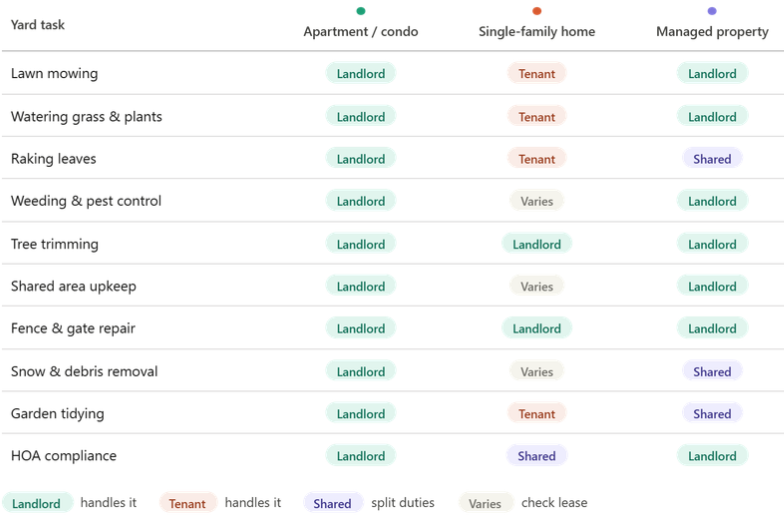
Clear communication helps avoid issues. Both sides should review the lease and confirm who handles each task. A well-defined lawn maintenance clause in rental agreement or even a yard maintenance lease addendum can prevent disputes later. If anything feels unclear, it is best to check local rental laws or discuss it early.
Does the type of rental property affect yard maintenance responsibility?
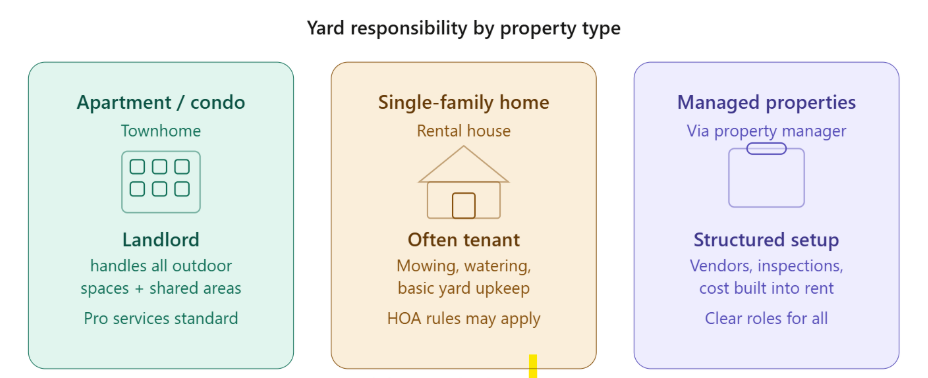
The type of property plays a big role in deciding who handles outdoor work. In some rentals, the landlord manages everything. In others, the tenant may take care of basic upkeep. You need to look at the property type first to understand how responsibility is shared.
Apartments, condos, and townhomes
In most apartment-style properties, the landlord or property manager handles outdoor spaces. This includes lawns, gardens, and shared areas. Many properties use apartment complex lawn care and apartment landscape maintenance services to keep everything clean and uniform.
A well-maintained exterior helps attract tenants and keeps the property value strong. For this reason, landlords usually do not expect tenants to manage these areas. They rely on regular apartment lawn care services to maintain the property.
Single-family rental homes
Single-family homes follow a different approach. These properties do not need to match nearby homes, so landlords have more flexibility. In many cases, tenants handle basic yard work like mowing and cleaning. This is where questions like do renters mow the lawn or are tenants responsible for mowing the lawn often come up.
Some areas have a homeowner’s association with strict yard rules. If the yard is not maintained, fines may apply. In such cases, the landlord must ensure the property meets those standards, even if the tenant manages day-to-day upkeep.
In professionally managed properties, landlords often rely on systems and defined processes to handle tasks like inspections, vendor coordination, and outdoor upkeep with lawn care services. If you want to understand how this works in detail, you can explore what to expect from a property management software company and how they manage maintenance responsibilities at scale.
How does the lease agreement decide yard maintenance duties?
The lease plays the most important role in deciding who handles yard work. Before raising any concern, tenants should review the rental agreement lawn maintenance terms. In many cases, the answer is already written in the contract.
If the lease clearly states that the tenant is responsible, then the tenant must handle regular outdoor tasks like mowing, trimming, and cleaning. This is where tenant responsible for lawn maintenance becomes a clear rule, not a choice.
If the lease assigns the task to the landlord, then the landlord must arrange services or manage the upkeep. In some cases, both sides agree on a shared approach through a detailed clause.
A clear agreement helps avoid problems like tenants not taking care of yard or confusion over duties. The lease remains the final authority in most disputes related to yard care.
Long story short
Hiring a professional service is a smart investment for any rental property. Overgrown grass and unmanaged outdoor areas can attract pests and create safety risks. A poorly maintained yard can also turn away potential tenants and reduce the overall appeal of the property. With that in mind, potential tenants would rightfully look elsewhere if any rental property looked unmanaged.

In most cases, landlords should not rely fully on tenants to manage outdoor upkeep. Maintaining a clean and presentable property helps attract better tenants and protects long-term value. This is why many owners choose to work with a property management company that handles inspections, vendor coordination, and overall property upkeep.
At the same time, landlords can still recover these costs. Many include maintenance expenses in the rent so the property stays well-maintained without placing the full burden on tenants. This approach keeps expectations clear and ensures the property always looks its best.
Authors