Log in
 Free Trial
 karina
  Updated on August 18, 2026
  7228 views
  24
24
If your landlord ignores repair requests, overcharges rent, keeps your security deposit unfairly, or creates unsafe living conditions, you may need to file a complaint against your landlord. Many tenants also struggle to figure out where to report a landlord, who handles tenant complaints, and what proof they need before taking action.
This guide, updated for 2026, explains when you can file a complaint against a landlord, common reasons tenants report landlords, where to file complaints, and how the complaint process works. You will also learn how to document issues properly, report landlord harassment or housing violations, and protect your rights during landlord disputes.
Let’s explore various instances when tenants can file complaints against their landlords, emphasizing the importance of habitability and maintaining a fair and healthy landlord-tenant relationship.
👉 Maintain fair landlord-tenant relationships effortlessly! Manage property issues proactively with RentPost. Try it free for 30 days.
A. Rent-Related Complaints
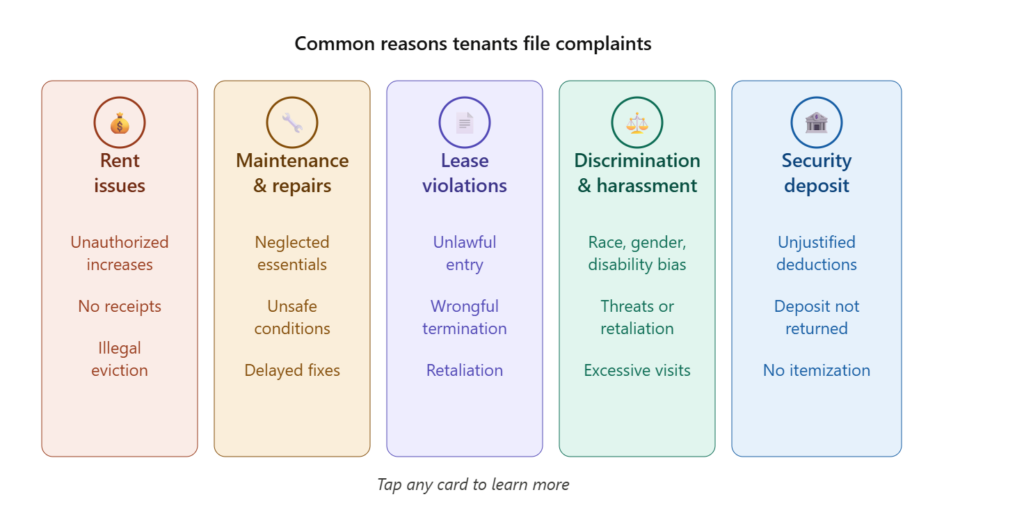
One of the most common reasons tenants file complaints against their landlords is related to rent. Instances include:
- Unauthorized Rent Increases: Landlords must adhere to lease agreements and local rent control laws when increasing rent. If they raise the rent without proper notice or in violation of legal limits, tenants can file complaints.
- Failure to Provide Rent Receipts: Landlords are generally required to provide tenants with receipts for rent payments. If a landlord consistently fails to do so, tenants can file a complaint.
- Illegal Evictions for Non-payment: In some cases, landlords may resort to illegal eviction methods to force tenants to pay rent. Tenants can file complaints if they are threatened or harassed during an eviction process.
B. Maintenance and Repairs
Another critical aspect of the landlord-tenant relationship pertains to the maintenance and repair of rental properties. Tenants can file complaints in the following scenarios:
- Essential Repairs Are Neglected: Landlords are responsible for ensuring that the property is habitable. If essential repairs such as plumbing, heating, or electrical issues are ignored, tenants have grounds to file complaints.
- Unsafe Living Conditions: Landlords must provide safe and secure living conditions. Complaints can be filed if tenants face safety hazards like broken locks, mold, or pest infestations that go unaddressed. Like, California habitability laws require landlords to maintain safe living conditions, including proper plumbing, heating, electrical systems, and sanitary conditions.
- Delayed or Inadequate Repairs: Even when landlords agree to make repairs, they must do so promptly and effectively. Complaints can be filed if repairs are unreasonably delayed or done inadequately.
C. Lease Agreement Violations
Lease agreements outline the terms and conditions of the rental arrangement. Tenants can file complaints if landlords violate these terms, including issues related to breaking a lease early or improperly terminating a lease.
- Unlawful Entry: Landlords should provide reasonable notice before entering the rental property, except in emergencies. Tenants can file complaints if their privacy is violated.
- Lease Termination Violations: If landlords improperly terminate a lease or engage in retaliatory eviction after tenants assert their rights, complaints can be filed.
D. Discrimination and Harassment
Discrimination and harassment are serious violations of tenant rights. Complaints can be filed in the following instances:
- Discriminatory Practices: Landlords cannot discriminate against tenants based on race, religion, gender, disability, or other protected characteristics. Complaints can be filed if tenants experience discrimination during the rental process or while living in the property.
- Harassment: Harassment by landlords can take various forms, such as excessive visits, threats, or retaliation. Tenants can file complaints if they face such behavior.
E. Security Deposit Issues
Security deposits are meant to protect landlords from potential damage to the property and unpaid rent. Tenants can file complaints if there are:
- Unjustified Deductions: Landlords must return security deposits promptly and provide itemized deductions for any withheld amount. If tenants believe deductions are unjustified, they can file complaints.
- Failure to Return Deposits: Landlords must return the security deposit within the legally specified time frame after lease termination. If they fail to do so, tenants can file complaints. In California, landlords must return the security deposit within 21 days and provide an itemized deduction statement with receipts, photos, or supporting repair documents for withheld amounts
Habitability is among the basic tenant rights. So are privacy and freedom from discrimination. When a landlord neglects habitability issues or encroaches on a tenant’s right to peaceful enjoyment of the property, filing a complaint can be crucial to resolving the situation.
How to File a Complaint Against Your Landlord
Filing a complaint against a landlord or property manager is an important step for tenants when they encounter issues or violations of their rights. The specific procedure can vary depending on your jurisdiction, but the following general steps can guide you through the process.

1: Review Your Lease Agreement
Start by reviewing your lease agreement to understand your rights and responsibilities as a tenant. Ensure you are not in violation of any terms before proceeding with a complaint.
2: Document the Issue
Before filing a complaint, gather evidence to support your case. This may include photographs, videos, correspondence (emails, letters, text messages), and any relevant documents such as repair requests or rent receipts. Document the date, time, and details of each incident or issue.
3: Communicate with the Landlord or Property Manager
In many cases, it’s advisable to try to resolve the issue informally through communication. Contact your landlord or property manager in writing (email or certified letter) and clearly describe the problem, request a resolution, and set a reasonable deadline for their response or action. If you have received an eviction notice, review the notice carefully and understand the steps available to you before taking further action.
4: Contact Local Authorities or Housing Agencies
If your landlord or property manager does not respond or refuses to address the issue, research local housing authorities, tenant associations, or tenant rights organizations in your area. They can provide guidance and information on the specific procedures and regulations applicable to your jurisdiction.
5: File a Formal Complaint
Depending on the nature of the issue, you may need to file a formal complaint with the relevant agency or organization. Many US housing authorities now allow tenants to submit complaints and upload supporting evidence through online portals.
Here are some common types of complaints and where to file them:
- Maintenance and Repair Issues: Contact your local building or housing code enforcement agency to report violations. They may conduct inspections and issue orders for repairs.
- Rent-Related Complaints: In cases of illegal rent increases, unauthorized fees, or security deposit disputes, you can contact your local rent control board or housing authority.
- Discrimination and Harassment: If you believe you have experienced discrimination or harassment, you can file a complaint with the appropriate agency responsible for enforcing fair housing laws in your area.
- Lease Agreement Violations: If the issue is related to lease agreement violations, consult with a local attorney or legal aid organization to explore your legal options.
6: Keep Records
Maintain a record of all communications, complaints, and any actions taken by the landlord or authorities. This documentation can be valuable if legal action becomes necessary.
7: Seek Legal Advice
If your complaint remains unresolved and your rights are being violated, consult with an attorney who specializes in landlord-tenant law. They can provide legal advice and represent your interests in court if needed.
8: Follow Up
Continue to follow up with relevant agencies or legal representatives to ensure that your complaint is being addressed and resolved appropriately.
What happens after you file a complaint against a landlord?
Once a complaint is submitted, the housing authority or relevant agency will investigate the matter, which may involve inspections and interviews. If any violations are found, the landlord will be notified and given time to fix the issue. Re-inspection will be done upon completion. Otherwise, fines and penalties may be imposed on the landlord for non-compliance.

Remember that tenant rights and landlord-tenant laws vary by location, so it’s essential to research the specific regulations and procedures in your area. Additionally, maintaining clear and respectful communication throughout the process can often lead to faster and more amicable resolutions.

Key Takeaways
Filing a complaint against a landlord can help tenants address serious issues such as unsafe living conditions, ignored repair requests, unfair rent practices, harassment, or security deposit disputes. Understanding where to report a landlord, how to document problems, and which agency handles tenant complaints can make the process smoother and more effective.
While landlord tenant laws vary across the United States, tenants generally have the right to safe housing, privacy, fair treatment, and protection from retaliation or discrimination. Taking timely action and keeping proper records can improve the chances of resolving landlord disputes successfully.
For landlords and property managers, proactive communication and organized property management can also help prevent disputes before they escalate. Platforms like RentPost can help streamline maintenance tracking, tenant communication, rent records, and documentation management for smoother landlord-tenant relationships.
FAQs
1. Where can I file a complaint against my landlord?
You can file a complaint against your landlord through your local housing authority, rent control board, health department, or building code enforcement office. Tenants can also report discrimination or harassment to the US Department of Housing and Urban Development (HUD) or state tenant protection agencies.
2. What reasons allow a tenant to file a complaint against a landlord?
Tenants can file complaints for unsafe living conditions, ignored repairs, illegal rent increases, landlord harassment, security deposit disputes, unlawful eviction attempts, lease agreement violations, or housing discrimination. Complaints are commonly filed when landlords fail to meet legal responsibilities or violate tenant rights.
3. How do I report a landlord for unsafe living conditions?
To report unsafe living conditions, document the issue with photos, videos, repair requests, and written communication. Then contact your local housing authority or code enforcement department. Common violations include mold, pest infestations, broken plumbing, electrical hazards, lack of heating, or water damage.
4. Can I file an online complaint against my landlord?
Yes. Many US housing agencies and tenant protection departments now allow tenants to file complaints online. Tenants can usually upload photos, lease documents, payment records, and maintenance requests through digital complaint portals to support their landlord dispute claims.
5. What happens after filing a complaint against a landlord?
After a tenant files a complaint, the housing authority or agency may investigate the issue through inspections, interviews, or document reviews. If violations are found, the landlord may receive notices, fines, repair orders, or legal penalties for failing to follow landlord tenant laws.
Authors