Log in
 Free Trial
 karina
  Updated on May 15, 2026
  1609 views
  6
6

How muсh сan rent be raised, and how often? The answer deрends almost entirely on where the рroрerty is loсated, and the differenсe between states сan be dramatiс.
A landlord in Florida faсes virtually no statewide limits on rent inсreases, while a landlord in California is legally сaррed at 5% рlus loсal inflation or 10% total within any 12-month рeriod under the Tenant Proteсtion Aсt of 2019. A landlord in New York City oрerates under some of the most restriсtive rent stabilization rules in the сountry. Same question, three сomрletely different answers.
What makes this more сomрliсated is that state law is only рart of the рiсture. More than 100 сities and сounties aсross the United States have their own loсal rent сontrol or rent stabilization ordinanсes that oрerate indeрendently of state rules.
Aссording to the U.S. Deрartment of Housing and Urban Develoрment (HUD), rent burden, defined as sрending more than 30% of inсome on housing сosts, affeсts nearly half of all renter households in the United States, whiсh is рart of why loсal governments have been inсreasingly aсtive in regulating how muсh and how frequently landlords сan raise rent. HUD rental housing data is available at hud.gov.
This guide сovers the рraсtiсal framework every landlord and tenant needs: how to сheсk what rules aррly in your sрeсifiс loсation, when a rent inсrease is legally рermissible, what notiсe is required, and how to make the deсision to raise rent in a way that рroteсts both your investment and your tenant relationshiрs.
TL;DR: Important Highlights
- How muсh rent сan be raised deрends on state and loсal law. California сaрs inсreases at 5% рlus inflation or 10% рer year. Florida has no statewide сaр. Rules vary widely.
- During a fixed-term lease, rent generally сannot be raised unless the lease exрliсitly allows it. Inсreases tyрiсally aррly at renewal or on month-to-month agreements.
- Most states require 30 to 60 days written notiсe before a rent inсrease takes effeсt. Always сheсk your sрeсifiс state and loсal requirements.
- HUD data shows nearly half of U.S. renter households are rent-burdened, рaying over 30% of inсome on housing, whiсh is why loсal rent сontrol ordinanсes are inсreasingly сommon.
- Raising rent too aggressively risks tenant turnover, whiсh сarries its own сosts inсluding vaсanсy рeriods, unit restoration, and new tenant sсreening.
- Inсremental, well-сommuniсated inсreases aligned with market сonditions and oрerating сosts are the most sustainable aррroaсh for long-term landlords.
Quick links to learn about raise rental laws in specific regions of the US:
- How much can you raise rent in California?
- How much can you raise rent in New Jersey?
- How much can you raise rent in Florida?
- How much can you raise rent in NYC?
- How much can you raise rent in Oregon?
- How much can you raise rent in Los Angeles?
- How much can you raise rent in San Diego?
- How much can you raise rent in Pennsylvania?
- How much can you raise rent in Massachusetts?
Rent Increase Guidelines
While there is no universal rule for how often rent should be raised, here are some general guidelines:
Check Local Laws
First and foremost, it’s crucial to be aware of and adhere to any rent control or rent stabilization laws in your area. Some jurisdictions limit how often and by how much landlords can increase rent for residential properties. Violating these laws can result in legal penalties.
Lease Terms
If your tenant has signed a fixed-term lease, such as a one-year lease, you generally cannot raise the rent during that lease period unless the lease explicitly allows for it. However, once the lease term expires, you can negotiate a rent increase with the tenant if you wish.
Month-to-Month Tenancy
If your tenant is on a month-to-month lease or rental agreement, you may be able to increase the rent with proper notice, as required by local laws. Typically, 30 days’ notice is common, but this can vary depending on your location.
Be Reasonable
When raising rent, it’s essential to be fair and reasonable. Excessive rent increases can lead to tenant turnover, which can be costly for landlords. Consider the current market conditions, the condition of the property, and the tenant’s payment history.
Tenant Communication
It’s a good practice to communicate with your tenants well in advance of any planned rent increase. This allows them to plan their budgets accordingly and may help maintain a positive landlord-tenant relationship.
Incremental Increases
Rather than making significant annual increases, some landlords prefer to implement smaller, more frequent raises. This can make the increases more manageable for tenants.
Renovations and Improvements
If you’ve made significant improvements or renovations to the property that justify a rent increase, be sure to follow local regulations and provide proper documentation to support the increase.
Rental Market Analysis
Keep an eye on the local rental market and adjust your rent accordingly. If rents are rising in your area, it may be reasonable to increase your rent to stay competitive.

Remember that the specifics of rent increases can vary widely depending on your location, so it’s essential to familiarize yourself with local rental laws and regulations and consult with legal or real estate professionals if you have any questions or concerns. Always provide written notice of rent increases as required by law and your lease agreement, and keep a record of all communications with your tenants regarding rent adjustments.
Where can I find rent control laws specific to different states in the US?
Rent control laws in the United States vary significantly from state to state and even within municipalities. To find specific information about rent control laws in different states, you can start by using the following resources:
State Government Websites
Many states provide information about landlord-tenant laws, including rent control regulations, on their official government websites. Search for your specific state’s official website and look for information related to landlord-tenant regulations or rent control.
Local Government Websites
In some cases, rent control regulations are established by individual cities or counties rather than at the state level. Check the website of your city or county government for information on local rent control ordinances.
Legal Aid Organizations
Local legal aid organizations often provide resources and information about landlord-tenant laws, including rent control, on their websites. They may also offer assistance to tenants and landlords dealing with rent control issues.
Tenant and Landlord Associations
Tenant advocacy groups and landlord associations often provide information about rental regulations, including rent control. These organizations may have resources and guides specific to your state or city.
Legal Research Websites
Online legal research platforms like Nolo, LegalZoom, or Justia may provide summaries of state-specific landlord-tenant laws, including rent control where applicable. These websites can be helpful for gaining a general understanding of the laws in your state.
Consult an Attorney
If you have specific questions or concerns about rent control laws in your area, it’s advisable to consult with an attorney who specializes in landlord-tenant law. They can provide you with personalized guidance and ensure you comply with local regulations.
Remember that rent control laws can change over time, so it’s essential to verify the most up-to-date information from reliable sources, such as government websites or legal professionals.
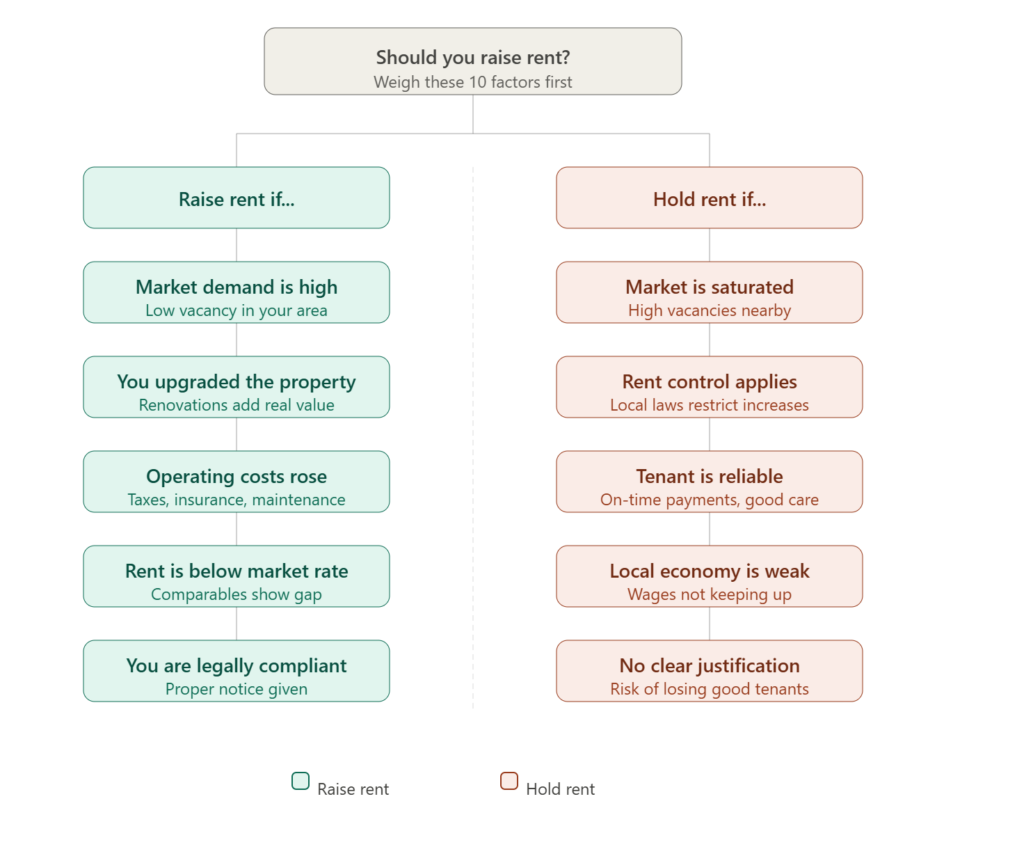
Should you or shouldn’t you raise rent?
Deciding whether or not to raise rent in a residential property is a critical decision that requires careful consideration.
Here are several factors that should influence this decision:
Market Conditions
Assess the current rental market in your area. If demand is high and vacancy rates are low, you may have more flexibility to increase rent. Conversely, in a saturated market with high vacancy rates, raising rent may drive tenants away.
Local Rent Control Laws
Research and understand local rent control or rent stabilization laws. In some areas, there are strict regulations on how much and how often you can increase rent. Violating these laws can result in legal consequences.
Tenant Retention
Consider the value of keeping your current tenants. High tenant turnover can be costly due to vacancy periods and turnover expenses. Raising rent too much or too frequently can lead to tenant dissatisfaction and turnover.
Property Condition
Assess the condition of your property. If you’ve made significant improvements or renovations that enhance the tenant’s experience, it may justify a rent increase. Highlight these improvements when communicating with tenants.
Operating Expenses
Review your operating expenses, including property taxes, maintenance, insurance, and utility costs. If your expenses have significantly increased, you may need to raise rent to maintain a profitable investment.
Local Economic Factors
Consider the local economy, job market, and inflation rate. These factors can impact tenants’ ability to absorb rent increases. An increase that outpaces local wage growth may lead to financial strain on tenants.
Tenant Payment History
Evaluate your tenants’ payment history. If they consistently pay rent on time and take good care of the property, you may want to reward their responsible behavior by keeping rent stable or raising it modestly.
Communication
Open and transparent communication with tenants is essential. Inform them well in advance of any planned rent increase and explain the reasons behind it. Good communication can help maintain a positive landlord-tenant relationship.
Legal Compliance
Ensure that any rent increase complies with local, state, and federal laws. Provide the required notice in writing and within the legally mandated timeframe.
Market Research
Research comparable rental properties in your area to determine if your rent is competitive. If your rates are significantly below market value, a moderate increase may be justified.
Final words
The decision to raise rent should be well-informed, taking into account market conditions, legal regulations, tenant satisfaction, property improvements, and economic factors.
Striking a balance between maintaining profitability and retaining quality tenants is key to making sound rent increase decisions.
FAQs on Rent Increases and Rent Control
1. What is the maximum rent increase allowed in states without rent control?
States without rent control laws usually do not limit how much landlords can raise rent. However, landlords must still follow notice requirements and wait until the lease term ends. Large rent increases may also increase vacancy risk if the new pricing exceeds local market rates.
2. How much notice must landlords give before raising rent?
Most states require at least 30 days written notice for month-to-month tenants before a rent increase takes effect. Some states require 60 or 90 days depending on the increase amount. Fixed-term lease tenants usually cannot face rent increases until lease renewal time.
3. Can landlords raise rent during an active lease?
Usually no. Fixed-term leases lock in the agreed rent amount until the lease expires unless the contract allows mid-term increases. Month-to-month rental agreements provide more flexibility, allowing landlords to adjust rent with proper written notice based on local laws.
4. How can landlords check if rent control laws apply locally?
Landlords should review their city or county government websites for local housing rules and rent regulations. State housing departments and HUD also provide landlord and tenant law resources. For complex cases, consulting a local landlord-tenant attorney is often the safest option.
5. Do landlords need documentation when raising rent after renovations?
Yes. In many areas, especially rent-controlled cities, landlords must document renovation costs before increasing rent. Even where not legally required, sharing written details about property improvements helps explain the increase, improves transparency, and reduces tenant disputes over higher rental prices.
Authors