Log in
 Free Trial
 jacob-thomason
  214 views
  3
3

Ending a rental agreement is rarely just about moving out or finding a new tenant. Notice periods decide how calm or chaotic the process becomes.
Tenants need enough time to plan their next home, arrange movers, and avoid rushed decisions. Landlords, on the other hand, rely on notice periods to manage cash flow, schedule repairs, and line up new renters without gaps.
A simple example makes this clear.
Imagine a tenant leaves with short notice and the unit sits empty for weeks. Now, imagine having clear notice, time to advertise, and a smooth handover instead.
That difference comes down to notice rules. Whether it’s 30 days or 60 days, understanding notice periods helps both sides stay protected, avoid disputes, and keep rental relationships professional and stress-free.
What Is a Notice Period?
A notice period is the amount of time one party must give before ending a rental agreement.
In simple terms, it’s a formal heads-up. This notice is usually written and clearly states the intent to move out or terminate the lease. Rental agreements often spell out the exact length of this period, such as 30 or 60 days, so there’s no confusion later.
The reason notice periods exist is fairness. Tenants shouldn’t be forced to leave overnight, and landlords shouldn’t be surprised by a sudden vacancy. A notice period creates breathing room for both sides. Renters get time to search for a new place, handle moving plans, and close out utilities. Property owners gain time to prepare the unit, schedule inspections, and start marketing to new tenants.
Notice periods also reduce conflict. When expectations are clear, there’s less room for misunderstandings or rushed decisions. In many US states, notice requirements are tied to local landlord-tenant laws, especially for month-to-month leases. Following these rules helps avoid legal trouble and protects everyone involved. At its core, a notice period is about respect, planning, and keeping the rental process smooth and predictable for both groups involved.
Learn about Navigating Notices to Vacate and Eviction Proceedings
What Does a 30-Day Notice Letter Mean?
A 30-day notice letter is a written statement from a tenant saying they plan to move out within the next 30 days. This type of notice is most common with month-to-month rental agreements and short-term leases. In many states, including California, Arizona, Texas, and Florida, tenants are allowed to end a month-to-month tenancy by giving at least 30 days’ written notice, unless the lease or local law says otherwise.
Tenants usually use a 30-day notice when simple move-out planning is the key. A job change, a sudden relocation, or finding a new apartment quickly often triggers this option. This notice gives renters a legal and organized way to exit without breaking the lease rules.
Landlords expect clarity in a 30-day notice. The letter should include the move-out date, the rental address, and a clear statement that the tenant intends to end the tenancy. Many property owners also expect tenants to keep paying rent through the notice period and leave the unit in good condition. Proper notice allows landlords to schedule showings, plan repairs, and avoid income gaps.
Pros and Cons of a 30-Day Notice
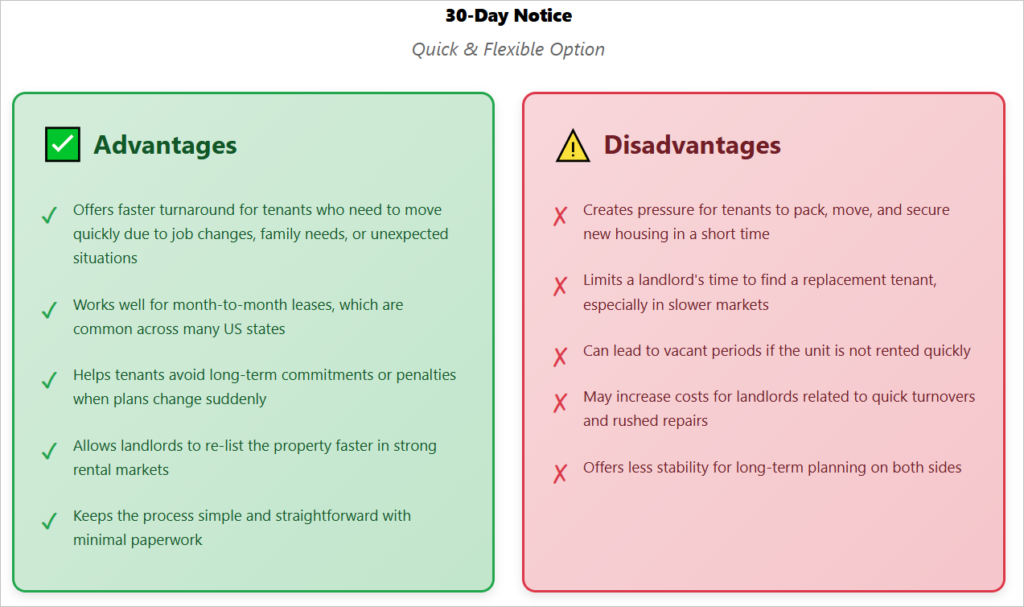
30 day notice Pros
- Offers faster turnaround for tenants who need to move quickly due to job changes, family needs, or unexpected situations.
- Works well for month-to-month leases, which are common across many US states.
- Helps tenants avoid long-term commitments or penalties when plans change suddenly.
- Allows landlords to re-list the property faster in strong rental markets.
- Keeps the process simple and straightforward with minimal paperwork.
30 day notice Cons
- Creates pressure for tenants to pack, move, and secure new housing in a short time.
- Limits a landlord’s time to find a replacement tenant, especially in slower markets.
- Can lead to vacant periods if the unit is not rented quickly.
- May increase costs for landlords related to quick turnovers and rushed repairs.
- Offers less stability for long-term planning on both sides.
What Does a 60-Day Notice Letter Mean?
A 60-day notice letter means a tenant formally tells the landlord they plan to move out two full months in advance. This notice period gives both sides more breathing room and is often written directly into the lease agreement, especially for long-term rentals.
Many landlords prefer a 60-day notice because it helps with planning. Extra time allows them to advertise the unit, schedule showings, and line up maintenance or upgrades without rushing. In competitive or slower rental markets, this longer window reduces the risk of vacancy and lost income. It also supports smoother transitions, which benefits property managers handling multiple units.
From a landlord’s point of view, a proper 60-day notice should clearly state the move-out date, reference the lease, and confirm that rent will be paid through the notice period. Tenants are also expected to keep the property in good condition, allow reasonable access for showings, and follow move-out rules like cleaning or key returns.
Overall, a 60-day notice creates structure. It favors stability over speed and helps both parties stay organized, prepared, and legally aligned.
👉 Learn how RentPost’s rental leasing software help landlords and property managers.
Pros and Cons of a 60-Day Notice
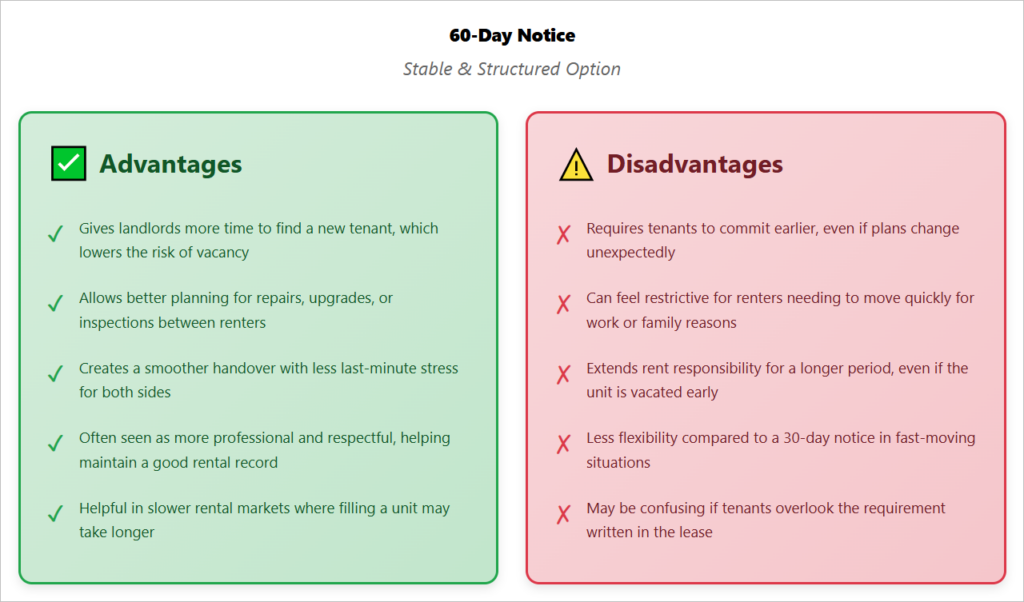
60 day notice Pros
- Gives landlords more time to find a new tenant, which lowers the risk of vacancy
- Allows better planning for repairs, upgrades, or inspections between renters
- Creates a smoother handover with less last-minute stress for both sides
- Often seen as more professional and respectful, helping maintain a good rental record
- Helpful in slower rental markets where filling a unit may take longer
60 day notice Cons
- Requires tenants to commit earlier, even if plans change unexpectedly
- Can feel restrictive for renters needing to move quickly for work or family reasons
- Extends rent responsibility for a longer period, even if the unit is vacated early
- Less flexibility compared to a 30-day notice in fast-moving situations
- May be confusing if tenants overlook the requirement written in the lease
A 60-day notice favors stability and planning, but it asks for more certainty upfront.
Key Differences Between 30 and 60-Day Notice
1. Length of Commitment
A 30-day notice requires a shorter time commitment, making it easier for tenants who need to move quickly. On the other hand, a 60-day notice locks in plans earlier, which works better for landlords who prefer predictability and advance planning.
2. Planning Time for Landlords
With a 30-day notice, landlords often have limited time to market the property, screen applicants, and prepare paperwork. A 60-day notice provides a wider window to advertise, schedule showings, and line up the next tenant without rushing decisions.
3. Flexibility for Tenants
Thirty days offer more freedom, especially for renters facing job changes, family needs, or unexpected relocations. Sixty days cuts down that flexibility, since tenants must finalize moving plans well in advance.
4. Lease Requirements
Many month-to-month agreements allow a 30-day notice, while longer or more formal leases commonly require 60 days. The notice length usually reflects how much stability the landlord wants built into the agreement.
5. Financial Impact
A shorter notice can mean quicker rent changes or vacancy risk. A longer notice often protects landlords from sudden income gaps but may increase financial pressure on tenants if plans shift.
6. Legal Risk and Disputes
Shorter notice periods often lead to confusion or disputes if timelines are miscalculated. A 60-day notice leaves less space for misunderstanding, which can reduce disagreements over move-out dates, final rent, or security deposits.
7. Turnover Frequency
Properties operating on 30-day notices usually experience higher tenant turnover. A 60-day notice tends to slow down turnover, helping landlords maintain longer occupancy cycles and more stable rental histories.
8. Maintenance and Renovation Planning
With only 30 days, landlords may delay repairs until the next tenant moves in. A 60-day notice allows time to plan upgrades, order materials, or schedule contractors before the unit becomes vacant.
Both notice periods serve different needs, depending on timing, stability, and expectations.
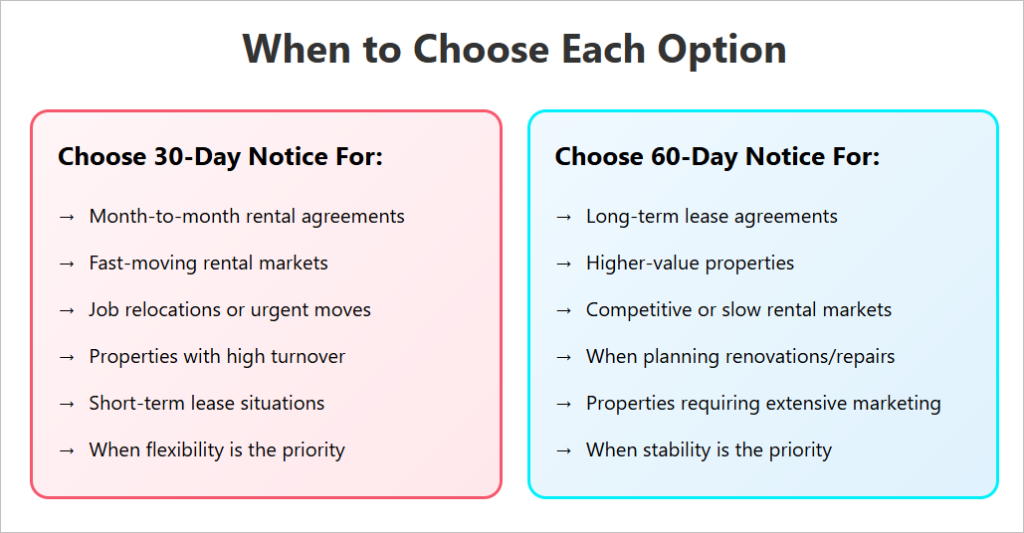
When to Choose a 30-Day Notice Letter?
A 30-day notice letter works best when flexibility comes above everything.
Short-term leases, month-to-month rentals, or situations where a tenant plans to relocate quickly often call for this option. Many landlords choose it in fast-moving rental markets where finding new tenants is easier. It also suits properties where turnover is expected and manageable. This notice is helpful when both parties communicate well and agree on timelines without complications.
When to Choose a 60-Day Notice Letter?
A 60-day notice letter is ideal when planning and stability are priorities. Long-term leases, higher-value properties, or competitive rental markets benefit from extra time.
Landlords often prefer this option to schedule showings, repairs, or renovations without pressure. Tenants also gain more time to secure new housing. This notice works well when both sides want a smoother, lower-stress transition.
Here’s a final takeaway:
Final Takeaway
Choosing between a 30-day and a 60-day notice comes down to timing, lease terms, and local rules.
A 30-day notice fits short-term or month-to-month rentals where flexibility matters. A 60-day notice works better for long-term leases or situations that need more planning. No matter which option applies, clear communication makes the process smoother for everyone. Following state and local laws, giving proper written notice, and keeping expectations realistic helps avoid disputes. When both landlords and tenants plan ahead and stay compliant, move-outs feel far less stressful and far more predictable.
Author