Log in
 Free Trial
 karina
  Updated on March 29, 2026
  29148 views
  29
29

When tenants leave a rental property without paying utility bills, landlords face real problems. Unpaid bills can lead to service shutoffs, legal issues, and extra costs. In some cases, the landlord may need to clear these dues before renting the property again.
Many landlords deal with this issue when a lease ends. If you do not track utility payments closely, you may end up paying for someone else’s usage. This situation can also create delays when a new tenant tries to start services in their name.
This article is updated in 2026 with the latest legal considerations, common landlord risks, and practical steps to recover unpaid utility bills and prevent future issues.
👉 Protect your property from unpaid utility bills! Manage tenant transitions easily with RentPost. Sign up for your free trial today!.
TL;DR: Unpaid Utility Bills by Tenants
- Landlords may have to pay dues depending on the lease and account setup.
- Recover money through deposit, communication, or legal steps.
- Unpaid bills can delay new tenants and utility connections.
- Utility liens can attach to the property and create legal or resale issues.
- Tenants may still be legally liable even after moving out.
- Clear lease terms and screening help prevent future issues.
What Is a Utility Lien and How Does It Affect Landlords?
In some areas, utility companies can place a lien on a property when bills stay unpaid. This can happen even if a tenant used the service. The lien attaches to the property, not the tenant. This creates risk for property owners, especially when tenants leave without clearing dues.
A lien is a legal claim on a property to recover unpaid bills. A utility lien applies when charges for water, gas, electricity, or waste services remain unpaid. In most cases, utility providers enforce payment by shutting off services. Still, a lien can delay a property sale or affect new tenants.
Many landlords ask if they are responsible in such cases. The answer depends on local laws and whose name is on the utility account. If the account stays in the landlord’s name, they may need to clear the dues.
Some landlords keep utility accounts in their own name to avoid service gaps. This gives control but also adds risk. If a tenant does not pay, the unpaid balance can fall on the landlord.
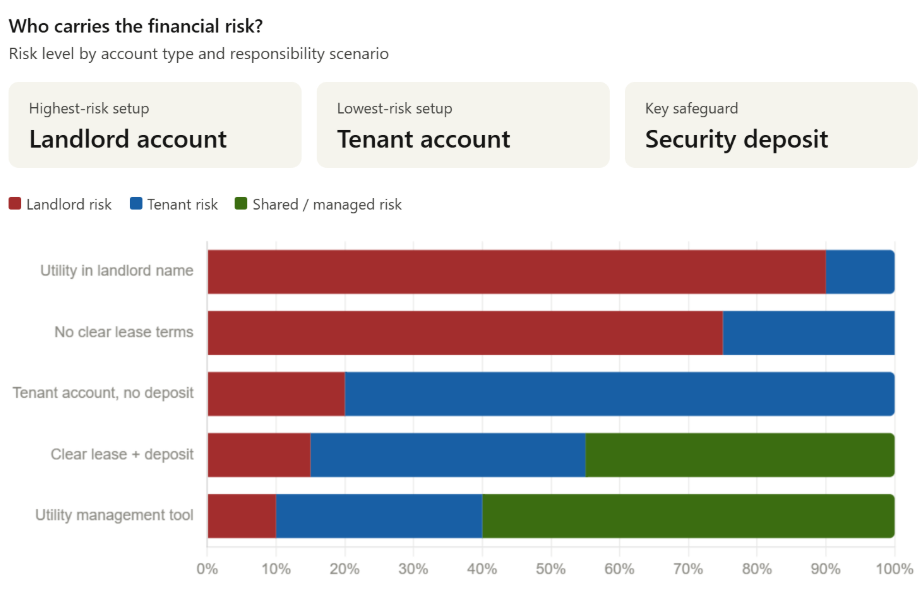
To reduce this risk, landlords should screen tenants carefully and define utility payment rules clearly in the lease. This helps prevent unpaid utility bills and avoids future issues.
What Happens If a Tenant Leaves Without Paying Utility Bills?
When a tenant leaves without clearing utility dues, landlords often face both financial and operational issues. The outcome depends on local laws and lease terms.
Landlord Responsibility
In some rental agreements, landlords agree to cover certain utilities like water, gas, or trash. In such cases, the landlord must pay any pending amount. This often answers the question of who is responsible for unpaid utility bills. Responsibility depends on what the lease states and whose name is on the account.
Utility Shut-Off
If the account was in the tenant’s name and they leave without payment, the provider may disconnect the service. This can delay new tenants from setting up utilities. It may also affect renting or selling the property. Many landlords face this when they ask what happens if the tenant does not pay utility bills.
Security Deposit Deduction
Landlords usually collect a deposit before move in. If dues remain unpaid, they can deduct the amount from this deposit if the lease allows it. This helps manage cases of unpaid utility bills by tenants. If the amount is higher than the deposit, the balance still needs recovery.
Small Claims Court
If the deposit does not cover the dues, landlords can file a case in small claims court. This step helps recover losses when tenants don’t pay utilities and avoid payment after leaving the property.
Collection Agency
If legal action does not work, landlords may involve a collection agency. These agencies follow up with the tenant to recover the amount. This situation often connects to queries like what happens if you don’t pay the electric bill and move out, as it can impact credit records.
Tenant Liability
Tenants may still need to pay the dues even after they move out. Courts can hold them responsible based on the agreement. Many tenants ask whether they are responsible for utilities after they move out, and in most cases, they are if the account was in their name.
Special Case: Previous Dues
Sometimes, new tenants or owners face issues due to old unpaid bills. This relates to cases like outstanding utility bill previous owner, where past dues block new connections. Landlords should always check and clear such dues before a new lease starts.
What Are the Best Ways for Landlords to Recover Unpaid Utility Bills?
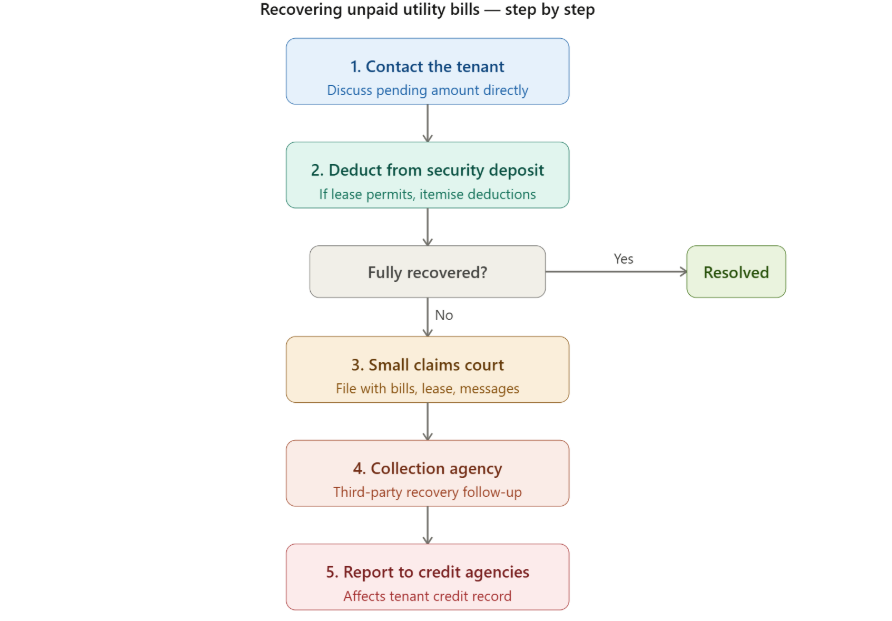
Landlords can take several practical steps to recover dues when tenants leave without paying. The right method depends on the lease, proof of bills, and local rules. A step-by-step approach works best.
Option 1: Start with Communication and Payment Discussion
Landlords should first contact the tenant and explain the pending amount clearly. In many cases, tenants may not know about the final bill or may delay payment due to short-term issues. You can request payment before moving out or agree on a simple plan. This step helps resolve cases where a tenant does not pay the electricity bill without moving into legal action.
Option 2: Adjust the Security Deposit
Most rental agreements include a deposit. Landlords can use this amount to cover unpaid charges if the lease allows it. You must follow proper steps and share a clear list of deductions. This is one of the easiest ways to handle a tenant not paying utilities without delay.
Option 3: File a Case in Small Claims Court
If the deposit does not cover the full amount and the tenant refuses to pay, landlords can take legal action. Small claims court offers a simple and cost effective way to recover dues. Keep all records ready such as bills, lease terms, and messages. This step becomes useful when dealing with cases where tenants leave and ignore payments.
Option 4: Work with a Collection Agency
If court action does not bring results, landlords can hire a collection agency. These agencies follow up with the tenant and try to recover the amount. They handle cases where tenants move out and stop responding after leaving unpaid bills.
Option 5: Report the Debt to Credit Agencies
As a final step, landlords can report unpaid dues to credit agencies where laws allow. This can affect the tenant’s future ability to get loans or credit. You must follow legal rules before taking this step to avoid disputes.
What Actions Can Utility Providers Take for Unpaid Bills?
Utility companies may take direct action when bills remain unpaid. If the account stays in the landlord’s name, the provider may hold the landlord responsible for clearing the dues. This often leads to confusion about who pays utilities when renting a house, especially when the lease does not clearly define responsibility.
In some cases, providers may stop services due to non payment. This can delay new tenants from setting up accounts. It can also create issues when you try to rent the property again. If there is no clear agreement, the provider may ask the property owner to settle the bill or work out a payment plan.
Rules vary based on local laws and company policies, so landlords should always check how utility accounts are set up and managed.

How Can Landlords Prevent Unpaid Utility Bills in the Future?
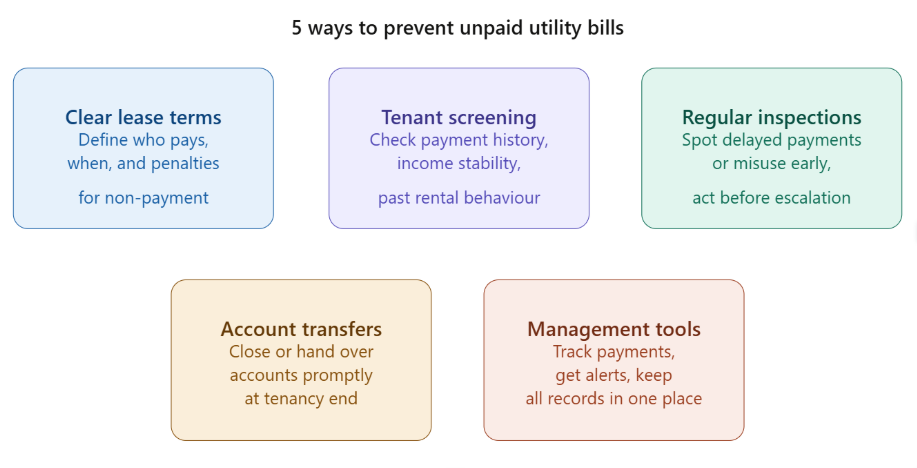
Landlords can reduce risk by taking clear and proactive steps before and during the tenancy. Prevention helps avoid loss and reduces disputes later.
Clear Lease Agreement
Write clear terms in the lease about utility payments. Define who pays, when to pay, and what happens in case of non-payment. This helps answer common concerns, like if tenants don’t pay utilities, and avoids confusion later.
Regular Inspections
Carry out periodic inspections to check property use and tenant compliance. These checks help you identify early warning signs, such as delayed payments or misuse of utilities. Early action can prevent bigger issues.
Utility Account Transfers
Transfer or close utility accounts at the right time. When a tenant leaves, ensure proper handover or switch the account quickly. This avoids gaps, unpaid bills, and service delays for the next tenant.
Use Utility Management Services
Use tools or services to track and manage utility payments. These systems send alerts, maintain records, and help you stay updated. They reduce the chances of missed payments and support better control.
Strong Tenant Screening
Screen tenants carefully before move-in. Check payment history, income stability, and past rental behaviour. This step reduces the risk of unpaid utility bills by tenants and helps you choose reliable tenants.
Final Words
Landlords often face real challenges when tenants leave without paying utility bills. This can lead to extra costs, service delays, and legal work. Many cases start with simple issues like missed payments but can grow if not handled early.
The best approach is to act step by step. Start with clear communication and try to recover the amount directly. If that does not work, use the security deposit or take legal steps like small claims court. In some cases, collection support may help recover the dues. Using a property management tool like RentPost can make this process easier. It helps track payments, manage leases, and keep all records in one place.
Prevention is just as important. Clear lease terms, regular checks, and proper utility account handling reduce risk. These steps help avoid confusion and limit cases where tenants leave unpaid bills behind.
Just by taking the right steps and using the right tools, landlords can protect their income, reduce stress, and maintain smooth tenant relationships.
Authors