Log in
 Free Trial
 karina
  Updated on August 17, 2026
  1829 views
  2
2
Figuring out how much property managers should charge is not always straightforward. Isn’t it?
Some charge a percentage of monthly rent, others use flat fees, and many combine both, depending on the property and workload involved. A small single-family rental usually needs a very different level of attention than a busy apartment building with constant tenant turnover and maintenance requests.
Experience, local rental demand, property type, and included services also play a big role in pricing. Some owners want full-service management, while others only need help with rent collection or leasing. That’s why management fees can vary so much from one property to another.
This easy guide breaks down common pricing structures, factors influencing management fees, and what both property owners and managers should realistically expect when setting rates.
👉Start managing your rental properties more efficiently with a 30-day free trial of our property management software today. Start your 30-day free trial.
TL;DR: Key Takeaways
- Most property managers charge 8%-12% of the monthly rent.
- Flat-fee pricing is common for larger or high-value properties.
- Property type, location, and services affect management costs.
- Experienced managers often charge more due to expertise and efficiency.
- Owners should compare value and service quality, not just pricing.
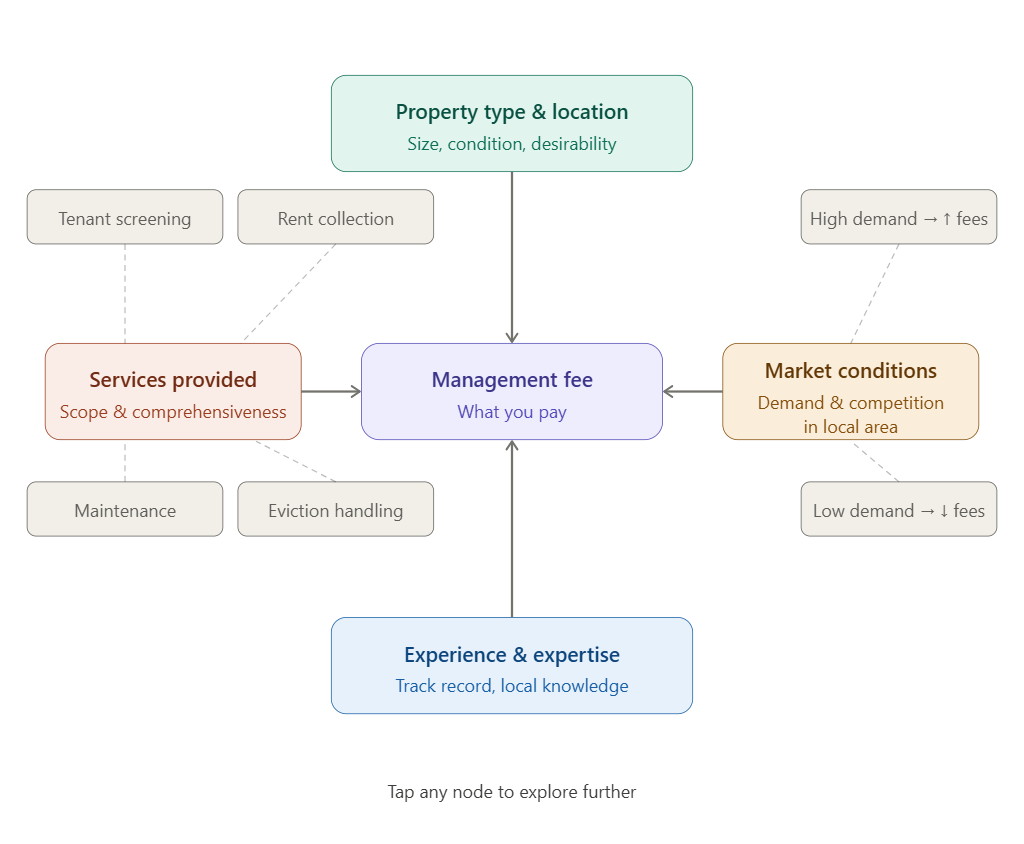
Factors Influencing Property Management Fees
While expertise, experience and track record have a significant impact on property management rates, there are other factors that affect how much property owners have to pay to have their rental properties managed by the professionals.
Residential property managers play a vital role in the real estate industry by overseeing the day-to-day operations and maintenance of rental properties on behalf of property owners. While their services are valuable, several factors can influence the fees they charge. It is important to consider these factors to gain a comprehensive understanding of the costs involved.
Property Type and Location
The location and type of property can significantly impact property management fees. Properties located in highly desirable areas or those with unique features may attract higher fees due to the potential for increased demand and rental income. Additionally, factors such as property size, number of units, and property condition can influence the complexity of management, thereby affecting the fees charged.
Services Provided
The range of services offered by residential property managers can vary. Typical services include marketing and advertising vacancies, tenant screening, lease administration, rent collection, property maintenance and repairs, accounting and financial reporting, and handling tenant disputes or evictions. The more comprehensive the services provided, the higher the management fees are likely to be.
Experience and Expertise
The level of experience and expertise of a residential property manager can influence the fees charged. Property managers with a proven track record, extensive knowledge of local regulations, and a wide network of industry contacts may command higher fees due to their ability to provide efficient and effective management services.
Local Market Conditions
Local market conditions play a significant role in determining property management fees. In areas with high demand for rental properties, property managers may charge higher fees due to the competitive nature of the market. Conversely, in areas with lower demand or an oversupply of rental properties, property managers may offer more competitive pricing to attract clients.
How Much Do Property Management Companies Charge?
How much do property management companies charge? For residential rental properties, ongoing management fees are commonly structured as a percentage of monthly rent, often around 8% to 12%, although actual rates depend on the property, location, number of units, and services included.
Some property management companies charge a flat monthly fee instead, while others combine a recurring management fee with additional charges for specific services.
Common property management fees may include:
- Monthly management fees
- Tenant placement or leasing fees
- Lease renewal fees
- Property inspection fees
- Maintenance coordination fees
- Setup or onboarding fees
- Vacancy management fees
For example, if a rental property generates $2,000 per month and the property manager charges 10%, the recurring property management cost would be $200 per month.
However, owners should look beyond the monthly management percentage. Additional leasing, maintenance, renewal, or inspection charges can increase the total cost of hiring a property manager.
For a more detailed breakdown of individual fees and costs, see our guide on how much property management costs.
Property Management Fee Payment Options
Before asking how much property managers should charge for their services, it is important to note that they could be at the mercy of the property owners especially when they are just starting out in this particular field of real estate. They may need to remain in this position until they prove themselves worthy of setting their own rates.
A possible payment method most property owners might insist on is a commission-based payment system. Probably not a pure commission, but enough to encourage the property manager to run an efficient operation.
Depending on the type of property being managed, the calculation of a commission-based payment could carry significantly. For example, a property manager might be given a commission for every vacancy filled in a residential property in addition to a fixed monthly percentage.
Let’s look into the three most common ways property management fees are typically structured:
- Percentage of Monthly Rent: Many property managers charge a percentage of the monthly rent as their fee. The average range is generally between 8% and 12% of the monthly rent. For example, if a property generates $2,000 in monthly rent and the property manager charges a 10% fee, the management fee would amount to $200 per month.
- Flat Fee: Some property managers charge a flat fee, regardless of the monthly rental amount. This approach is often used for properties with higher rental values or for clients who prefer a predictable cost structure. Flat fees can range from a few hundred dollars to several thousand dollars per month, depending on the complexity and size of the property.
- Combination Fee: In certain cases, property managers may employ a combination of a percentage-based fee and a flat fee. For example, they may charge a lower percentage fee (e.g., 5%) for properties with higher rental values while applying a flat fee for properties below a certain rental threshold.
Setting Prices on Your Own
Say you are as experienced as you want to be and have an established track record of being an excellent property manager. Then, if you are the miracle worker your property owner is looking for, you very well may be inclined to set your own rates on your own terms.
Even though you might be calling more of the shots, there are still some things to consider. You may be a great property manager, but it’s unlikely that you will accomplish everything entirely on your own. If you bring along your own team to assist you with property management, their compensation is something to be considered when determining how much you will charge.
The size and complexity of the property being managed will also essentially play into how much property managers should charge. For example, apartments and hotels require constant maintenance and oversight. Imaginably, these properties are quite demanding to manage for even the most skilled property manager, so the rates charged should reflect the inherent effort that will be involved.

Common Property Management Fee Structures
Property management companies generally use one of three main pricing structures. Understanding how each works can help property managers set competitive rates and property owners calculate their expected management costs.
Percentage of Monthly Rent
Many property managers charge a percentage of the monthly rent collected. Average property management fees for residential rentals commonly fall between 8% and 12%, although rates can vary depending on location, property type, and included services.
For example, if a property generates $2,000 in monthly rent and the management company charges 10%, the property management cost would be $200 per month.
Owners should also check whether the percentage is calculated based on rent collected or rent due. Under a rent-collected model, the management fee is typically earned only when rent is actually received.
Flat Monthly Fee
Some property management companies charge a fixed amount each month rather than a percentage of rental income.
A flat fee can provide more predictable property management costs, particularly for owners with multiple units or higher-rent properties.
However, owners should review exactly which services are included because leasing, maintenance coordination, inspections, and renewals may still carry separate charges.
Combination Fee
Some companies use a hybrid pricing structure that combines a percentage-based management fee with flat charges for specific services.
For example, a company might charge a monthly percentage for ongoing management while separately charging for tenant placement, lease renewals, property inspections, or maintenance coordination.
When comparing property management companies, owners should therefore consider the total expected cost, not simply the advertised monthly management fee.
The Bottom Line
Ultimately, how much property managers should charge will vary from manager to manager. PMs should know how much their skills are worth and be able to convey that to property owners. Property managers’ pay rates must also reflect their performance while managing properties.
Property owners are looking to their managers to make sure their investments have been worthwhile and eventually begin to turn in some profit. When a property manager has accomplished that, I feel they can start to set their own rates and answer the question of how much property managers should charge.
From the property owners’ end, they should carefully evaluate their specific requirements and consider the value and benefits offered by professional property management services when assessing the associated costs.
By doing so, property owners can make informed decisions and select a property manager who aligns with their needs and budget, ensuring the smooth and efficient management of their residential properties.
FAQs
1. What is the average property management fee?
Most residential property managers charge between 8% and 12% of the monthly rental income. However, the actual amount depends on property size, location, rental demand, and included services. Some managers also charge leasing fees, maintenance coordination fees, or renewal fees separately.
2. Do property managers charge flat fees or percentages?
Both are common. Many managers charge a percentage of collected rent, while others use a fixed monthly fee. Flat fees are often used for larger properties or higher-end rentals where owners prefer predictable costs each month.
3. Why do property management fees vary so much?
Management fees depend on how much work is involved. A property with frequent tenant turnover, maintenance issues, or multiple units usually requires more time and coordination. Local rental market conditions and the manager’s experience also influence pricing.
4. Are cheaper property management companies worth it?
Lower fees may save money upfront, but service quality matters more over time. Delayed repairs, poor tenant screening, or weak communication can create bigger expenses later. Many owners prefer paying slightly more for reliable management and fewer long-term problems.
5. What services are usually included in property management fees?
Most fees cover rent collection, tenant communication, maintenance coordination, lease management, and financial reporting. Some companies also include marketing, inspections, and tenant screening, while others charge separately for those services. Always review the management agreement carefully before signing.
Authors