Log in
 Free Trial
 jacob-thomason
  Updated on August 21, 2026
  137 views
  0
0
Buying a home has become increasingly difficult for many first-time buyers. Rising home prices, higher mortgage rates, and stricter lending requirements have made it harder to qualify for a traditional home loan.
That’s why many buyers explore rent-to-own homes in USA (also called lease-option homes). These arrangements allow you to rent a property while giving you the opportunity or in some cases the obligation—to purchase it later.
The challenge is that rent-to-own homes are rarely advertised like traditional home listings. Most sellers don’t market their homes this way because it adds legal complexity, delays the sale, and appeals to a smaller pool of buyers.
If you are serious about finding a legitimate rent-to-own property, here are the most reliable places to look.
Key Takeaways
- Rent-to-own homes are rare and rarely listed on mainstream real estate sites, finding one usually means working through an agent, a specialized program, or direct outreach.
- Several tech-backed programs, including Divvy, Landis, Home Partners of America, and Dream America, run structured rent-to-own models with published eligibility requirements.
- A real estate agent experienced in lease-option deals is often the fastest, safest path to a legitimate arrangement.
- Every rent-to-own deal should be verified with a title search before you pay any option fee.
What Is a Rent-to-Own Home?
A rent-to-own agreement lets you move into a home as a tenant while working toward purchasing it in the future.
There are two common types:
- Lease-option: You have the option to buy the home before the agreement expires, but you’re usually not required to.
- Lease-purchase: You agree upfront that you’ll buy the property at the end of the lease, making the arrangement more legally binding.
Most agreements require an option fee (sometimes called option consideration). In some contracts, a portion of your monthly rent may also be credited toward the future purchase price.
6 Ways to Find Legitimate Rent-to-Own Homes
Finding a legitimate rent-to-own home often requires a more proactive approach than searching traditional real estate listings. The following strategies are among the most reliable ways to identify potential opportunities:
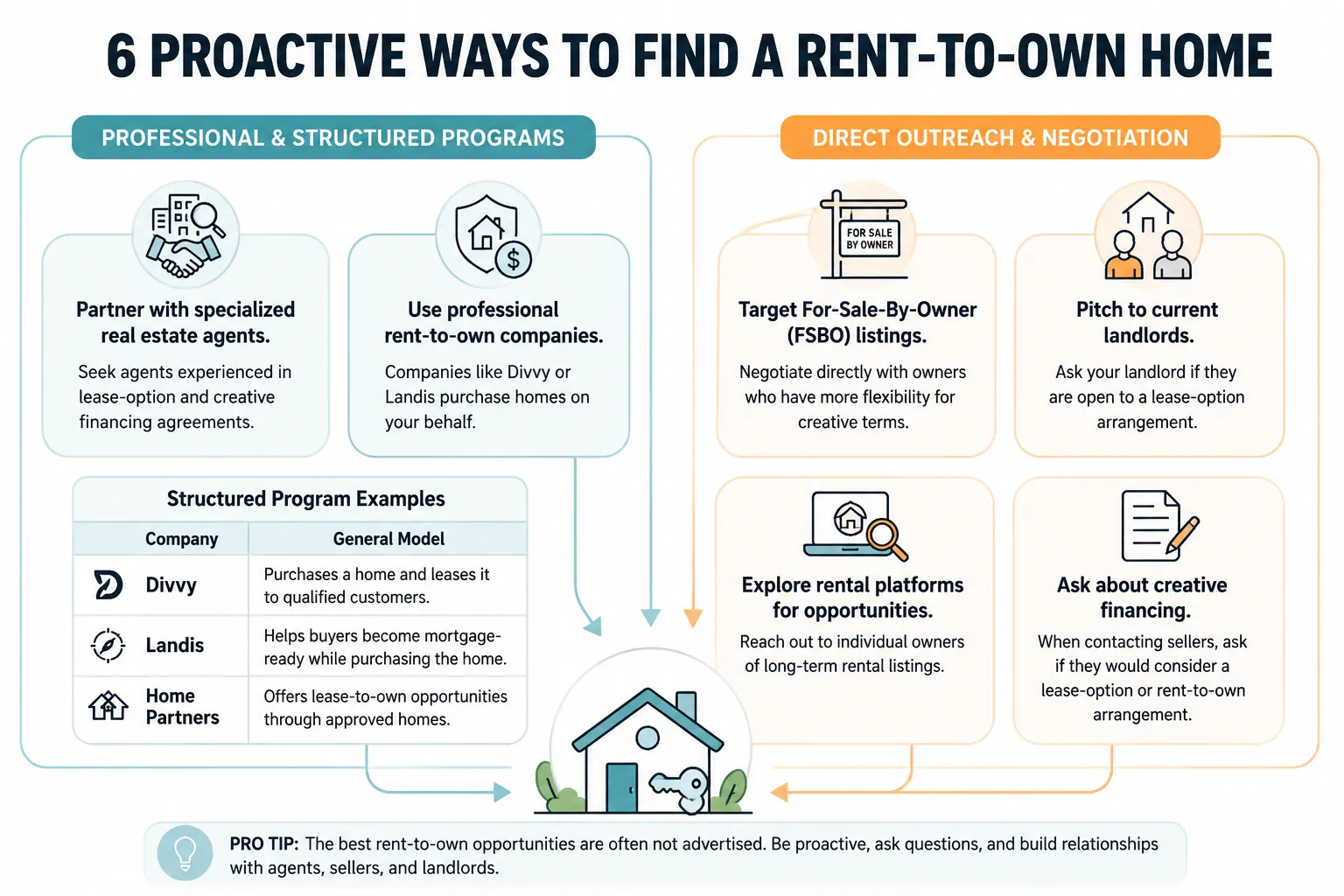
1. Work With a Real Estate Agent Experienced in Lease-Options
Not every real estate agent has experience with rent-to-own transactions.
Ask whether they’ve handled lease-option or lease-purchase agreements before. An experienced agent can:
- Identify sellers who may be open to creative financing
- Negotiate the purchase price and option fee
- Review rent credit terms
- Help structure an agreement that protects both parties
Many successful rent-to-own deals begin as traditional listings where the seller agrees to alternative financing after negotiations.
2. Explore Professional Rent-to-Own Companies
Several companies offer structured rent-to-own programs. Instead of negotiating directly with a homeowner, these companies purchase an eligible home and lease it to you with a path toward ownership.
Examples include:
| Company | General Model |
| Divvy | Purchases an eligible home and leases it to qualified customers in select markets. |
| Landis | Helps qualified buyers become mortgage-ready while purchasing an eligible home on their behalf. |
| Home Partners of America | Offers lease-to-own opportunities in participating markets through approved homes. |
| Dream America | Provides lease-to-own programs in selected markets for qualifying applicants. |
Because these companies frequently update their:
- service areas
- eligibility requirements
- credit score guidelines
- fees
- available markets
always verify the latest information directly on each company’s website before applying.
3. Search Specialized Rent-to-Own Websites
Some real estate websites specialize in lease-option or rent-to-own listings.
These platforms can be useful starting points, but remember:
- Listings may not always be current.
- Some properties may no longer be available.
- A listing does not guarantee the seller actually offers legitimate rent-to-own terms.
Always verify ownership and contract details independently before paying any money.
4. Use Rental Platforms to Identify Potential Rent-to-Own Opportunities
While dedicated rent-to-own listings can be limited, rental platforms can help you identify landlords who may be open to a future sale. If a property has been listed for rent for an extended period or is managed by an individual owner, it may be worth asking whether they’d consider a lease-option arrangement.
Platforms like RentPost make it easy to browse rental properties, connect with property owners or managers, and identify homes that could be good candidates for a rent-to-own conversation. Although listings aren’t specifically labeled as rent-to-own, reaching out directly can sometimes uncover opportunities that aren’t publicly advertised.
Tip: When contacting a landlord, explain that you’re interested in renting first with the possibility of purchasing the home later. Some owners may be open to discussing a lease-option even if it wasn’t part of their original listing.
5. Look for For-Sale-By-Owner (FSBO) Properties
FSBO sellers negotiate directly with buyers instead of using a listing agent.
Without an agent involved, some owners have greater flexibility and may be more willing to discuss:
- lease-options
- seller financing
- delayed closings
- rent-to-own arrangements
If you’re interested in a property, ask whether they’re open to creative purchase terms.
6. Talk to Your Current Landlord
If you already enjoy living in your current home, ask your landlord whether they’d consider selling it to you in the future.
Many landlords appreciate reliable tenants and may be open to converting an existing rental agreement into a lease-option arrangement, especially if they’ve been thinking about selling.
Do Your Due Diligence Before Paying Anything
Rent-to-own agreements can be legitimate, but they’re also attractive to scammers because buyers often pay an upfront option fee.
Before signing any agreement or sending money:
- Verify that the seller legally owns the property.
- Check for unpaid property taxes, liens, or foreclosure proceedings.
- Get every term in writing—never rely on verbal promises.
- Have a qualified real estate attorney review the agreement.
- Order a professional home inspection before committing.
- Understand whether your option fee and rent credits are refundable if the purchase doesn’t happen.
- Confirm who is responsible for repairs, maintenance, insurance, and property taxes during the lease.
Red Flags to Watch For
Be cautious if:
- The seller refuses to provide proof of ownership.
- You’re pressured to pay an option fee immediately.
- The contract contains blank spaces or vague language.
- The purchase price isn’t clearly defined.
- The seller won’t allow a home inspection.
- You’re asked to wire money before signing a written agreement.
If something feels rushed or unclear, walk away.
Final Thoughts
Rent-to-own can be a practical path to homeownership for buyers who aren’t ready to qualify for a mortgage today but expect to improve their financial situation over time.
The key is understanding that finding a rent-to-own home often requires proactive outreach rather than simply browsing traditional listings. Work with experienced professionals, verify every property, read the contract carefully, and never pay upfront fees without completing your due diligence.
Frequently Asked Questions
Where do most people find rent-to-own homes?
Most legitimate opportunities come through experienced real estate agents, direct negotiations with sellers, FSBO listings, or established rent-to-own companies—not standard home search websites.
Can I find rent-to-own homes on RentPost?
While RentPost doesn’t exclusively list rent-to-own homes, it can be a valuable starting point for finding rental properties and connecting with landlords. If you’re interested in a specific home, ask whether the owner would consider a lease-option or rent-to-own arrangement. Many successful agreements begin as standard rental conversations rather than listings explicitly marketed as rent-to-own.
Do I need a real estate agent?
No, but working with an agent who understands lease-option transactions can help you identify opportunities, negotiate favorable terms, and avoid costly mistakes.
Are rent-to-own websites legitimate?
Some are, but listings should always be verified independently. Before paying any option fee, confirm ownership, review the contract carefully, and conduct proper due diligence.
What’s the difference between a private rent-to-own agreement and a rent-to-own company?
With a private agreement, you negotiate directly with the homeowner. Rent-to-own companies use standardized qualification processes and contracts, purchasing eligible homes before leasing them to approved customers.
Legal Disclaimer
This article is for general informational and educational purposes only and should not be considered legal, financial, or real estate advice. Rent-to-own programs, eligibility requirements, fees, and market availability may change over time. Always verify current information and consult a qualified real estate agent, attorney, or financial advisor before entering into any rent-to-own or lease-option agreement.
Author