Log in
 Free Trial
 karina
  9965 views
  11
11
According to industry reports, there are 4 million Airbnb hosts worldwide. Many property owners today ask one simple question: is airbnb worth it or is traditional renting a better option?
An airbnb rental property can offer flexible income and higher earning potential, but it also comes with more work and changing demand. This is why many people compare airbnb vs renting before making a decision.
If you are thinking about renting out on airbnb or exploring an airbnb investment property, you need a clear idea of how it works and what to expect.
This guide article is updated for 2026 and breaks down the basics, pros and cons, and key factors that help you decide if Airbnb is the right move for you.
👉 Maximize your Airbnb investment potential! Optimize short-term rental management with RentPost! Start your 30-day free trial now.
What is an Airbnb rental?
An Airbnb rental is a short-term stay where people rent out their property, such as a home, apartment, or even a single room, to guests for a few days or weeks through the Airbnb platform. It works as an online marketplace that connects hosts with travellers looking for flexible places to stay
Instead of long-term leases, hosts offer their space on a nightly or weekly basis. This makes it easier to attract tourists, business travellersa, and short-term visitors who want comfort and flexibility.
The platform allows hosts to create listings, set prices, add photos, and manage bookings. Guests can compare options, read reviews, and book stays directly through a secure system.
Unlike traditional renting, an Airbnb rental property gives you the chance to earn income from short stays. In many cases, hosts can earn more during peak seasons compared to fixed monthly rent.
For example, if you list your home during holidays or local events, you may earn more in a few days than in a full month of traditional rent.
Today, Airbnb has become a global platform with millions of listings, making it easier for anyone to start renting out on Airbnb and even build an Airbnb rental business with the right strategy.
How does Airbnb rental property investment work?
An airbnb investment property works by turning your home or any suitable space into a short-term rental that earns income from guests. Instead of fixed monthly rent, you charge per night or week. This gives higher earning potential but also requires active management.
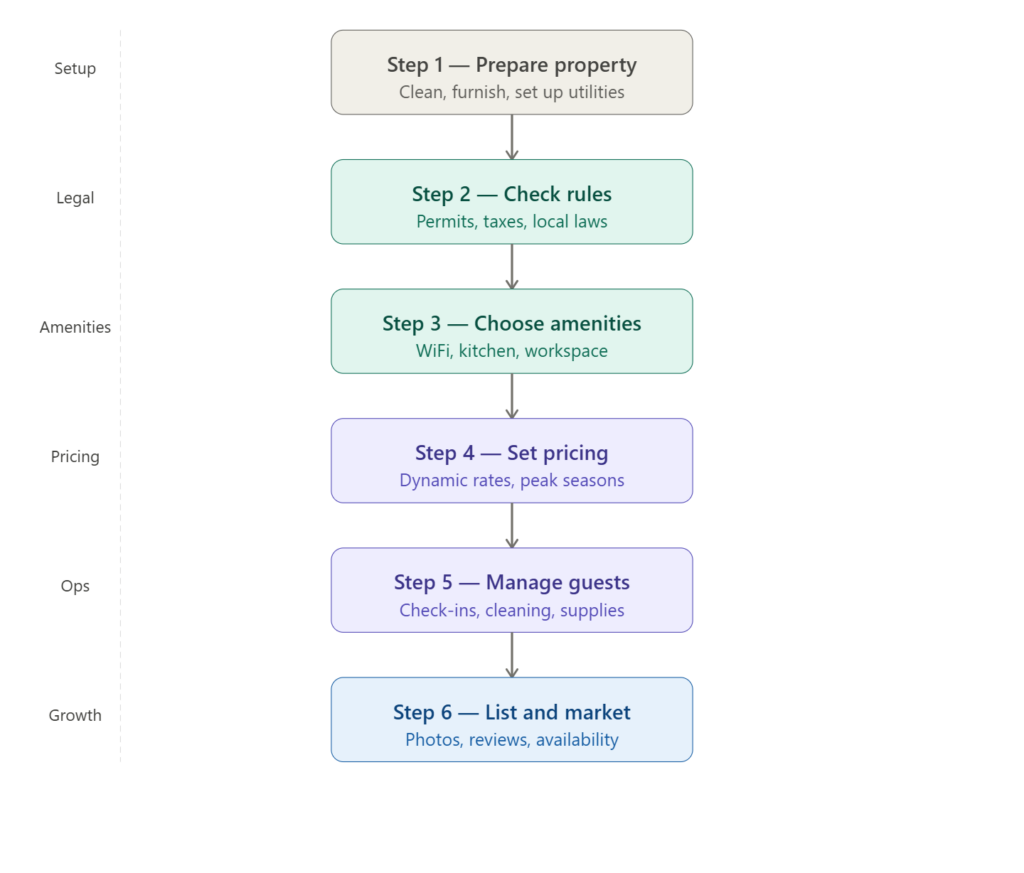
If you are exploring Airbnb investment or planning to start an Airbnb rental business, here is how the process works step by step.
Step 1. Prepare your property for guests
Start by making your space clean, safe, and ready for guests. You do not need a full renovation, but basic furniture, working utilities, and safety features are essential.
This step is more about setup than construction. You shift from long-term renting to short-term hosting, which means handling pricing, guest turnover, and maintenance differently.
Step 2. Understand basic rules before you start
Before you fully invest in an airbnb rental property, you must check legal and tax rules.
- In the US, there is no single Airbnb law, but local city rules control permits and usage
- At the federal level, the IRS requires you to report rental income in most cases
- There is one key exception:
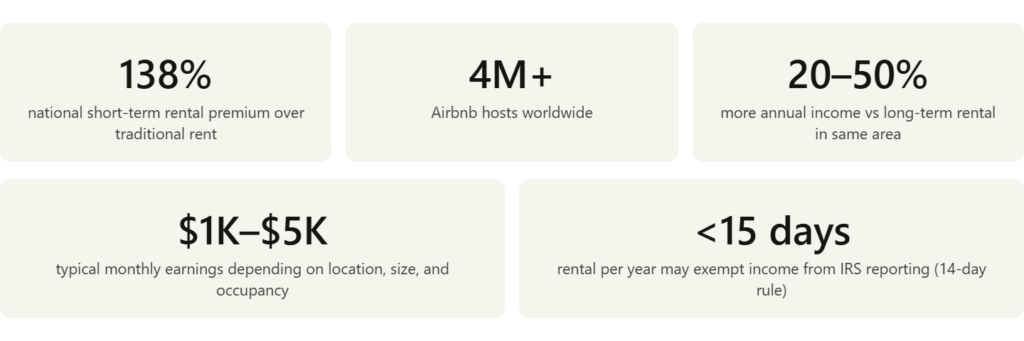
- If you rent your property for less than 15 days in a year, you may not need to report that income
This means your airbnb rental income may be taxable depending on how often you rent. Ignoring rules can lead to fines or listing removal, so always verify local regulations before you start.
Step 3. Choose the right amenities
Amenities play a big role in your bookings and reviews. They help your property stand out in a competitive airbnb rental market. Guests expect more than just basic furniture. Most look for fast WiFi, a smart TV, clean and comfortable bedding, and a functional kitchen.
Small extras like toiletries or snacks can also improve the overall experience. When you offer better amenities, you can increase your airbnb income potential and justify higher pricing.
Step 4. Set a smart pricing strategy
Airbnb pricing is not fixed like traditional rent. It changes based on demand, season, and nearby listings. To improve your Airbnb profitability, you need to adjust your pricing during peak seasons and stay competitive with similar properties in your area.
Many hosts also use smart pricing tools to update rates automatically. The goal is to keep a balance between high occupancy and strong earnings.
Step 5. Manage guests and property operations
Short-term rentals require more active work than long-term renting. Since guests stay for shorter periods, you need to manage frequent check-ins and check-outs. This includes cleaning, laundry, restocking supplies, and checking the property after each stay.
This is why owning an Airbnb is not passive income. As your bookings grow, you may need cleaners or a property manager to handle daily operations.
Step 6. List, market, and manage your property
Once your listing is live, daily management becomes important. You need to write a clear and attractive listing, respond to guest messages quickly, update pricing and availability, and handle reviews or issues. Consistent management helps you build trust, improve visibility, and grow your airbnb rental income over time.
What makes an Airbnb rental property competitive?
To stand out in a crowded market, your property needs to offer more than just a place to sleep. A strong airbnb rental property focuses on comfort, convenience, and guest experience.
Here are the key factors that can increase your airbnb rental income and help your listing perform better:
✅ WiFi and smart TVs
Guests expect fast and reliable internet for work, streaming, and communication. In fact, WiFi is one of the most searched amenities on Airbnb, and many travelers filter listings based on it . A smart TV adds extra value by giving guests easy access to entertainment during their stay.
✅ Comfortable beds and clean linens
Sleep quality directly impacts reviews. Guests expect fresh sheets, pillows, and clean bedding as basic essentials for a comfortable stay . A comfortable bed can often be the reason someone leaves a 5-star review or a negative one.
✅ Kitchen access
A well-equipped kitchen is one of the main reasons people choose Airbnb over hotels. Guests want the option to cook their own meals, especially for longer stays. Providing basic cookware, utensils, and appliances makes your property more useful and can even help you charge higher rates
✅ Work-from-home setup
Remote work has increased demand for dedicated workspaces. A simple desk, chair, proper lighting, and strong WiFi can attract business travelers and long-stay guests. This directly improves your airbnb income potential and booking duration.
✅ Proximity to key locations
Location plays a major role in bookings. Properties near tourist spots, city centers, airports, or business hubs tend to get more visibility and demand. A good location can significantly impact your performance in the airbnb rental market.
✅ Responsive communication and strong reviews
Quick replies and smooth guest experiences lead to better reviews. Guest satisfaction is strongly influenced by amenities and service quality, with most travelers saying it affects their overall stay . Better reviews improve your ranking and bring more bookings over time.
🌟 Tip: Hosting is not just about the space. It is about the full experience. The better you treat your guests, the stronger your reviews and the higher your earnings.
Is Airbnb investment still worth it in 2026?
Yes, Airbnb investment is worth it, and the short-term rental market has changed in 2026.
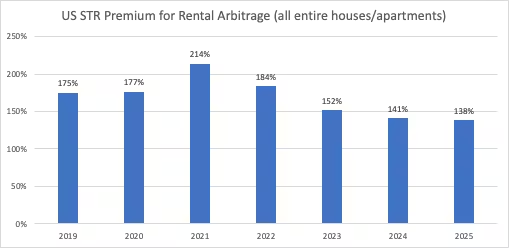
Recent data shows that short-term rentals still earn more than long-term rent. In fact, the national short-term rental premium is around 138%, which means Airbnb income is still higher than traditional rent in many markets. However, this gap is getting smaller as costs rise.
So, is Airbnb profitable today? Yes, but only with the right strategy.
1. Location plays the biggest role
Your Airbnb investment property will perform best in areas with strong demand, such as tourist locations, city centers, or business hubs. Some smaller cities are also becoming profitable due to lower costs and steady bookings.
2. Profit margins are tighter than before
Airbnb still offers higher returns than traditional renting, but the margin is not as high as it used to be. Rising rents and more listings are reducing profits. This is why many investors now question Airbnb’s profitability.
3. Rental arbitrage works only with the right numbers
Rental arbitrage is still possible, but it only works when your Airbnb rental income clearly exceeds rent and operating costs. Earlier, it worked in many markets. Now, it works only in select locations with strong demand and controlled costs
4. Regulations can impact your ability to host
Many cities now have strict rules, including permits, zoning laws, and rental limits. These rules can directly affect your airbnb rental property, so checking local laws is a must before investing.
5. Demand is stable, not rapidly growing
The market is no longer growing fast. Instead, it is stabilizing. Demand now depends on tourism, business travel, and local events rather than overall market growth.
6. Costs and operations affect real profits
Airbnb is not passive income. You need to manage cleaning, maintenance, guest communication, and pricing. These costs directly impact your airbnb rental income and overall returns.
7. Higher income but less predictable
Compared to long-term renting, Airbnb can generate more income, especially in peak seasons. However, earnings are not stable and can change month to month. This is why many investors compare airbnb vs renting before deciding.
Pros of investing in an Airbnb rental property
Airbnb rental properties have become a popular investment option for those looking to generate short-term rental income with greater flexibility. Here are the key advantages of Airbnb property investment:
1. Higher short-term rental income
Airbnb properties often earn more per night than traditional rentals, especially during peak travel seasons, holidays, or local events. Hosts can adjust pricing based on demand, allowing them to capitalize on high-traffic periods.
Example: A well-located Airbnb can earn 20–50% more annually than a long-term rental in the same area.
In fact, you can use Airbnb profit calculator to get a future return forecast based on your rental property details and property location:

2. Flexibility and control
You can adjust pricing based on demand, season, and competition. This gives you full control over your earnings and availability. You can also block dates for personal use, which is not possible with long-term renting.

3. Better use of your property
Airbnb allows you to use your property when needed and rent it when it is free. This flexibility makes it ideal for vacation homes or second properties.
4. Strong demand from global travellers
Airbnb connects you to a global audience. With millions of users, you can attract tourists, business travellers, and remote workers throughout the year.
5. Faster growth and scaling
With the right strategy, you can expand from one property to multiple listings. This helps you build a scalable airbnb rental business over time.
6. Building a reputation and repeat guests
Satisfied guests often return or recommend your property. Strong reviews and ratings build long-term booking momentum and brand trust.
Cons of investing in an Airbnb rental property
While the rewards of Airbnb investment can be substantial, it also comes with real challenges. Hosts must navigate short-term rental laws, manage frequent guest turnover, and handle unpredictable income. Success requires more than listing a property. It demands hands-on involvement, attention to local regulations, and the ability to adapt to shifting market conditions.
This section outlines the key drawbacks of investing in Airbnb rentals to help investors navigate challenges and make informed decisions.
1. Income is not stable
Your earnings depend on bookings, which change with seasons, demand, and competition. Some months may perform very well, while others may have low occupancy. This makes your airbnb income potential less predictable compared to fixed rent.
2. High management effort
Airbnb requires constant attention. You need to handle guest messages, check-ins, cleaning, maintenance, and pricing updates. It works more like running a small business than passive renting.
3. Ongoing costs reduce actual profit
Expenses like cleaning, utilities, repairs, platform fees, and supplies can add up quickly. Many new hosts focus only on revenue and ignore costs, which lowers real airbnb profitability.
4. Regulations and legal restrictions
There is no single Airbnb law in the US, but cities control short-term rentals. You may need permits, follow zoning rules, and pay taxes on your airbnb rental income. At the federal level, the IRS requires you to report rental income in most cases, except for specific cases like the 14-day rule. Ignoring these rules can lead to fines or listing removal.
5. Guest-related risks
Some guests may damage property, break rules, or leave negative reviews. Even one bad experience can affect your ratings and future bookings. This is a common challenge when owning an airbnb.
6. High competition
In popular areas, many listings compete for the same guests. Without strong pricing, good reviews, and better amenities, it can be hard to stand out.
7. Vulnerability to external events
Global events like pandemics, natural disasters, or travel bans can severely impact bookings. Investors must plan for worst-case scenarios and have backup strategies.
Airbnb vs traditional rental: What are the key differences?
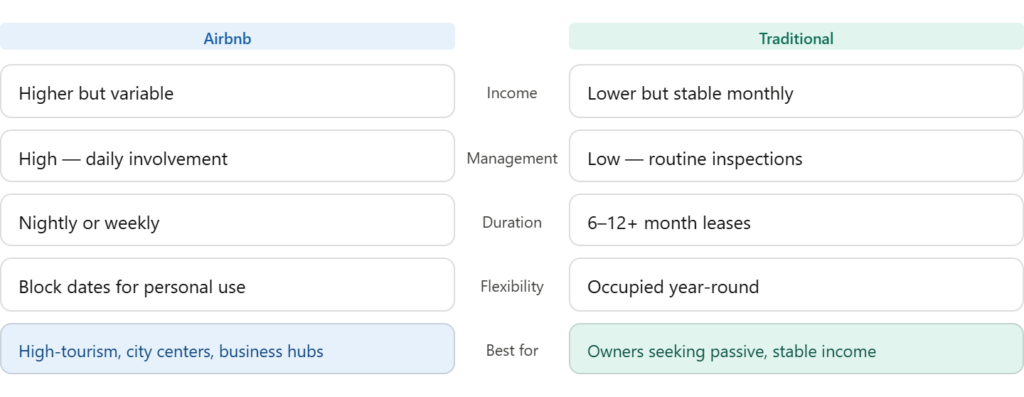
In the rental property investments, the choice between Airbnb and traditional rentals represents a fundamental decision for property owners. Three key distinctions define these rental approaches:
| Factor | Airbnb (Short-Term Rental) | Traditional Rental (Long-Term) |
| Rental Duration | Nightly or weekly stays; greater flexibility | Fixed lease terms (6–12+ months); limited flexibility |
| Income Potential | Potentially higher earnings during peak seasons; income varies with demand | Lower but consistent monthly rent |
| Cash Flow Stability | Unpredictable; depends on bookings and seasonality | Predictable; tenants pay monthly |
| Management Requirements | High involvement—frequent cleaning, guest messages, pricing updates | Low involvement—routine inspections and maintenance |
| Use of Property | Owners can block dates for personal use | Generally occupied year-round by tenants |
| Regulations | Subject to local short-term rental laws, taxes, and permits | Fewer regulatory hurdles in most areas |
| Marketing Needs | Requires online listing optimization, photos, reviews, and pricing strategy | Minimal marketing; often listed once through agents or local platforms |
| Best For | Hosts in high-tourism areas who want flexibility and are ready for hands-on management | Owners seeking passive, stable income without daily involvement |
Is Airbnb the right move for my rental property?
👉 Not sure if Airbnb is right for your property? Use the checklist below to evaluate your rental’s suitability for short-term hosting.
Should I Turn My Rental Property into an Airbnb?
Location & Demand
Local Laws & HOA Rules
Income Potential
Maintenance & Operations
Personal Involvement
Market Awareness

How RentPost™ helps you manage your Airbnb rental properties
The RentPost™ software can significantly enhance the management and efficiency of your rental units, including Airbnb rentals. Our software often provides streamlined tools for property owners and hosts, aiding in tasks like reservation tracking, automated communication with guests, accounting, and generating various reports.

RentPost™ can assist in pricing optimization based on market trends and occupancy rates, ensuring hosts maximize their earnings. Additionally, our software includes features for managing property listings, facilitating secure payment transactions, and generating detailed reports for financial analysis.

Overall, by automating and centralizing various aspects of Airbnb property management, the RentPost™ software allows property owners or hosts to focus more on delivering an exceptional tenant or guest experience while minimizing administrative burdens.
Final words
Investing in an Airbnb rental property isn’t just about listing your space—it’s about running a real business. While the earning potential is often higher than traditional rentals, it comes with hands-on responsibilities, shifting market trends, and strict local regulations. Success depends on choosing the right location, setting a competitive pricing strategy, and consistently delivering a great guest experience.
Data from platforms like AirDNA show that while overall demand may slightly fluctuate year-over-year, well-managed properties in high-traffic areas continue to outperform traditional rentals in terms of ROI. However, short-term rentals are not a passive income source—they require your time, adaptability, and a willingness to operate in a competitive and sometimes unpredictable market.
FAQs
Is Airbnb rental income higher than traditional rent?
Yes, Airbnb rental income is often higher than traditional rent, especially during peak seasons or in tourist-heavy locations. However, Airbnb income fluctuates based on occupancy, competition, and local demand, while traditional rent provides more stable and predictable monthly income.
How much can I earn by listing my house on Airbnb?
You can earn between $1,000 and $5,000 per month by listing your house on Airbnb, depending on your location, property size, amenities, and occupancy rates. Use tools like Airbnb’s calculator or RentPost to get accurate estimates based on your listing details.
How much of a cut/commission does Airbnb take?
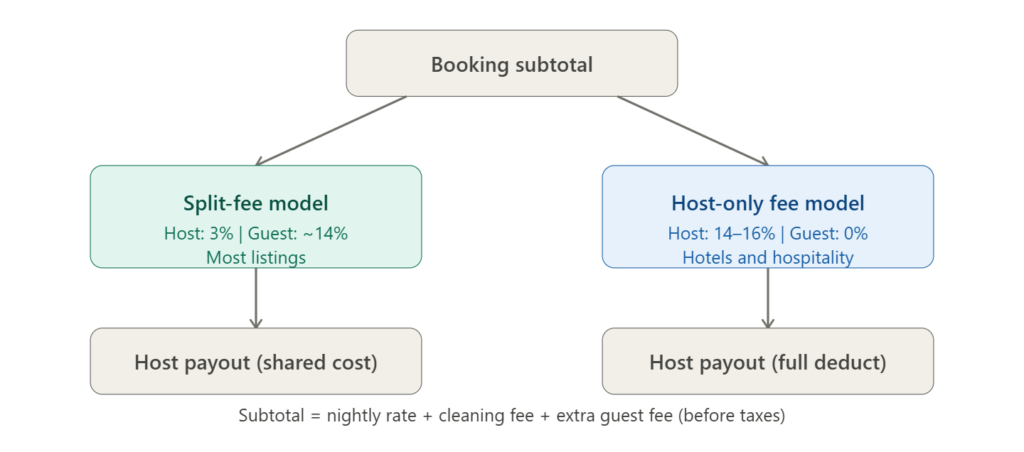
Airbnb typically charges any one of these two types of fees for every confirmed booking:
- Split-fee. Fees are split between host and guest, with hosts paying 3% and guests paying approximately 14% of the booking subtotal*.
- Host-only fee. A 14-16% fee is deducted entirely from the host payout and applies mostly to hotels, serviced apartments and other traditional hospitality listings.
*booking subtotal (nightly rate + cleaning fee + additional guest fee, if applicable—excluding Airbnb fees and taxes)
What are the legal requirements for hosting on Airbnb?
Legal requirements for hosting on Airbnb vary by location but often include business licenses, permits, registration with local authorities, and compliance with zoning laws. Some cities may also impose occupancy taxes and limit short-term rental days.
Do I need to live near my Airbnb property?
You don’t need to live near your Airbnb property. Many remote hosts successfully manage properties using local cleaners, co-hosts, or tools like RentPost that automate messaging, bookings, and maintenance tasks.
How do I manage cleaning and turnover for Airbnb?
Manage Airbnb cleaning and turnover by hiring professional cleaners or using property management tools to schedule tasks, restock supplies, and inspect the space after each stay. Automating these tasks reduces workload and maintains quality.
Are Airbnb rentals safe?
Airbnb rentals can be safe, but safety can vary based on location, property type, and the behavior of hosts and guests. Airbnb implements safety features, including host and guest reviews, secure payment systems, and a host guarantee program.
You might occasionally end up with a bad tenant here and there with a long-term rental. However, the chances of having a lousy resident with Airbnb rentals are much higher. That is because you’ll be dealing with many more residents and need to perform a different level of pre-screening.
A quick search on YouTube for “Airbnb nightmare” brings up over 10,000 results with a wide range of issues. Here is one such video. There is even airbnbhell.com website where you can read other horror stories.
Authors