Log in
 Free Trial
 jacob-thomason
  137 views
  0
0
Washington is one of the priciest states to rent in, with average monthly rent around $2,190, nearly 9.23% higher than the national average. But to keep housing fair now onwards, the state has introduced limits on how much a landlord can raise rent in Washington each year.
It’s not full rent control, but it still gives renters some protection from sudden hikes and helps landlords stay clear on the new rules.
So, here’s a simple breakdown of how it all works.
Table of Contents
How much can a landlord raise rent in Washington in 2026?
A landlord in Washington can raise rent by up to 7 percent plus the Consumer Price Index (CPI) or 10 percent, whichever is lower. This rule took effect after Governor Bob Ferguson signed House Bill 1217 on May 7, 2025. The cap applies to most residential properties except the following under RCW 59.18.710:
- Homes built within the last 12 years, based on the first certificate of occupancy
- Rentals owned by a public housing authority, public development authority, or nonprofit organization
- Low-income or owner-occupied properties such as shared units, small owner-occupied rentals, and qualified low-income housing developments
What is the rent increase cap in Washington State in 2026?
The rent increase cap in Washington State for 2025 is 10 percent. Landlords cannot raise rent beyond this limit, and this restriction will remain in effect until July 1, 2040, as stated in HB 1217.
What is the cheapest city to rent in Washington State?
The cheapest city to rent in Washington State is Sunnyside, with an average monthly rent of about $1,020. In contrast, Olympia is one of the most expensive cities, with average rents around 1,700 dollars per month.
Is there a limit on rent increase in Washington?
Yes. Washington State limits rent increases to no more than 7 percent plus inflation (CPI) or 10 percent, whichever is lower. Any rent hike above this limit violates House Bill 1217 and may be challenged by tenants.
What is the average rent increase in Washington State?
The average rent increase in Washington usually falls between 9 and 10 percent. For example, in Seattle, the average rent increase for 2025 is around 9.8%, which includes a 2.8% inflation adjustment.
How often can a landlord raise rent in Washington?
A landlord cannot raise rent during the first 12 months of a tenancy. After the first year, rent can only be increased once every 12 months.
How much notice is required for a rent increase in Washington State?
Landlords must give tenants at least 90 days of written notice before increasing rent. This replaces the old 60-day rule and applies to all rent increases under 10 percent as outlined in HB 1217.
Can a landlord raise rent more than 10 percent in Washington?
No. A landlord cannot raise rent in Washington by more than 10 percent. The maximum allowed increase under HB 1217 is 7 percent plus inflation (CPI) or 10 percent, whichever is less. This limit will remain effective until July 1, 2040.
What Are the New Rental Laws in Washington 2025?
A breakdown of some of the newer and key rental-law changes in Washington state for 2025 is given below.
Eviction Law
For evictions: the usual causes apply (i.e., non-payment of rent, lease violations, or criminal activity) and the landlord must follow the notice process under the Residential Landlord‑Tenant Act (RCW 59.18); for example a 14-day pay/or-quit notice for non‐payment.
Security Deposit Law
Washington law still allows landlords to set the amount of a security deposit (no statewide cap), although local cities (like Seattle) might limit that amount.
Key rules:
- The landlord must provide a written move-in checklist noting the unit’s condition and must give a receipt for the deposit.
- The deposit must be returned within 30 days of the tenancy ending (or sooner if local law says so), or the landlord may be liable for damages.
- Deductions may only be made for damage beyond ordinary wear & tear, unpaid rent or certain breaches and must be documented.
Right of Entry Law
Under RCW 59.18.150, a landlord has the right to enter the rented unit for certain purposes (repairs, inspections, showings), but there are rules:
- Landlords must give written notice (with date/time or time window, and contact number) at least two days in advance (except in an emergency).
- Entry must be at reasonable times and cannot be used to harass or unreasonably interfere with the tenant.
Quiet Enjoyment Law
Tenants in Washington have the implied right to “quiet enjoyment” of their home: that means the landlord must not interfere unreasonably with their use of the unit. Examples of breach: locking out the tenant, cutting off utilities, and excessive entries without proper notice.
Late Fees Law
Under RCW 59.18.170:
- A landlord may not charge a late fee if the rent is paid within five days after the due date.
- After five days, late fees may begin. There is no statewide cap on late fees under the statute, though some local jurisdictions impose limits.
Anti-Discrimination Law
The Fair Housing Act and Washington Department of Housing and Community Affairs (WDHCA) prohibit discrimination against tenants by landlords and real estate companies because of:
- Race
- Color
- Religion
- Sex
- National origin
- Income source
- Immigration status
- Familial status (presence of children under the age of 18 or pregnancy)
- Disability
- Disability Group Homes
How to Manage Your Rental Property and Rent Collection?
Managing rental properties can feel like a full-time job, which includes chasing payments, tracking expenses, and handling repairs.
Property management software makes this easier by putting everything in one place. It keeps the rentals organized, tenants satisfied, and more time free for what actually matters. As one property manager put it on Reddit, “I’m a full time property manager with my own rentals. I tried doing my own properties manually and completely messed it all up. Tracking income and expenses is time consuming without software. Maintenance tracking is also huge. Long term record keeping and document management are other needs to have aspects that software will give you.”
Rent collection becomes seamless when tenants can pay online. Automated reminders reduce delays, and every transaction is recorded, so no missed payments, no awkward follow-ups. Here’s the experience of a Reddit user with this automation: “Property management software saves so much time by automating tasks like rent collection and maintenance requests, plus it helps cut errors with better tracking and reports.”
From lease management to expense tracking, software brings calm to the chaos. Whether you’re managing one flat or an entire building, it helps you stay professional, efficient, and stress-free. In short, it turns a messy job into a smooth business.
How RentPost Helps Manage Your Rental Property and Rent Collection?
RentPost helps manage your rental property and rent collection. One user also says, “It’s streamlined for landlords who want easy rent collection, task management, and QuickBooks integration. Works well for scaling without getting too complicated.”
If you’re new to RentPost, here’s an overview of what this cloud-based property management tool can do:
- Real-Time Payment Tracking: With RentPost, easily track rent payments and outstanding balances in real-time with the status of each payment just a click away.
- Tenant Screening: Rent out your property to only trustworthy tenants after end-to-end screening that includes thorough background checks, credit checks, eviction history, identity verification, and more.
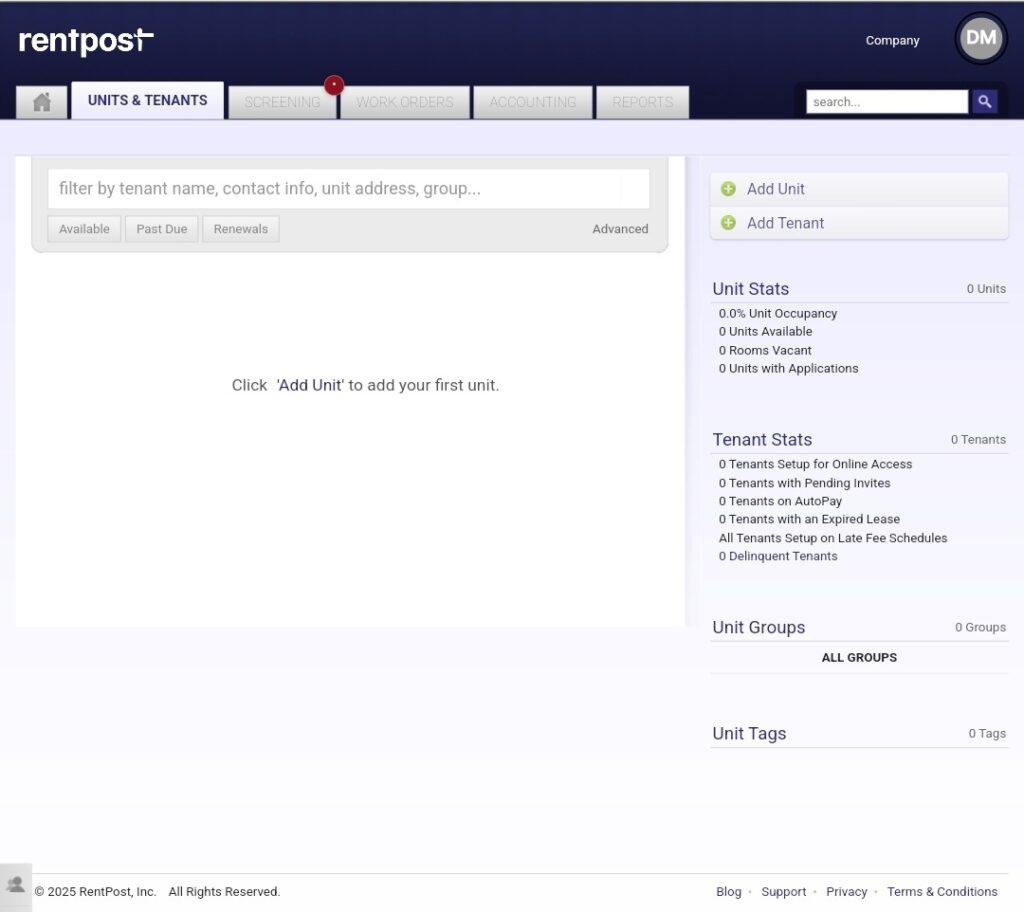
- Scalability: Add new units and tenants as your rental portfolio grows, and scale your business with minimal effort.

- Automated Payment Reminders: Automated payment reminders mean no more late rent payments. The PMS automatically calculates and applies late fees based on the schedules you define, so you never have to chase payments again.
- Work Order Management: Save time and money by streamlining work orders with RentPost. Accept maintenance requests from tenants, assign them to the respective maintenance personnel or managers, and the tool will take care of the rest.
- Financial Report Generation: Get valuable insights into your apartment’s finances through income and expense reports. Identify the right time to adjust rent prices based on your property’s performance.
Explore rent laws in other regions of the US:
- How much can you raise rent in California?
- How Much Can You Raise Rent in New Jersey?
- How Much Can You Raise Rent In Florida?
- How much can you raise rent in NYC?
- How Much Can You Raise Rent in Oregon?
- How Much Can You Raise Rent in Los Angeles?
- How Much Can You Raise Rent in San Diego?
- How Much Can You Raise Rent in Pennsylvania?
- How Much Can You Raise Rent in Massachusetts?
- How Much Can You Raise Rent in Chicago?
- How Much Can You Raise Rent in Illinois?
- How Much Can You Raise Rent in Maryland?
- How Much Can You Raise Rent in Michigan?
- How Much Can You Raise Rent in Seattle?
- How Much Can You Raise Rent in Texas?
- How Much Can You Raise Rent in Virginia?
Raise Rent in Washington: FAQs
Is There Rent Control in Washington?
Not in the traditional sense. And here’s why: for many years, local rent-control ordinances were barred in Washington under § 35.21.830 RCW. In 2025, the state passed House Bill 1217 which limits how much rent can be increased for most residential tenants; however, this is a rent increase cap, not full traditional rent control where rents are frozen or set by the government.
Is Washington a Landlord-Friendly City?
Surprisingly, Washington isn’t landlord-friendly. While landlords benefit from no state income tax, tenants are assured of no steep rent hikes, habitable living conditions, and a minimum 5-day grace period. So yes: landlords have rights, but there are more protections for tenants than you might see in a “very landlord-friendly” regime.
Are There Exceptions to the Rent Cap in Washington?
Yes. Some properties are exempt under RCW 59.18.710 and related sections. Exemptions include newer buildings (built within the last 12 years), some owner-occupied buildings, and subsidized housing or certain mobile home situations. Also, for manufactured and mobile homes, the cap is different (5%). So, while most rentals fall under the cap, some may not.
Can Rent be Increased During a Fixed-Term Lease in Washington?
The short answer is no! If there’s a fixed-term lease, then rent changes typically aren’t allowed mid-lease unless the lease itself includes a provision allowing it (or it’s a subsidized tenancy). Washington Law Help states: “During its term, the landlord can only change the lease they have already signed if the tenant agrees” for a fixed term.
What Are Tenants’ Rights if They Can’t Afford a Rent Increase in Washington?
If the increase is unlawful (higher than allowed cap, wrong notice, etc.), tenants get remedies. For example, HB 1217 states a tenant must give the landlord a written demand to reduce the unlawful increase, may terminate the rental agreement with 20-day written notice, and cannot be charged fees for doing so due to that violation.
Beyond that, tenants can negotiate with the landlord, seek housing assistance, or consult local tenant-rights organizations.
What Happens if a Landlord Increases Rent Without Following the Law in Washington?
If a landlord violates the cap or notice rules, a tenant (or the state Attorney General) may bring a court action. The tenant may recover excess rent paid, and may also be awarded reasonable attorneys’ fees and costs. The landlord may also be required to refund the increase and may face enforcement from the AG’s office.
Author