Log in
 Free Trial
 jacob-thomason
  Updated on August 18, 2026
  1097 views
  1
1
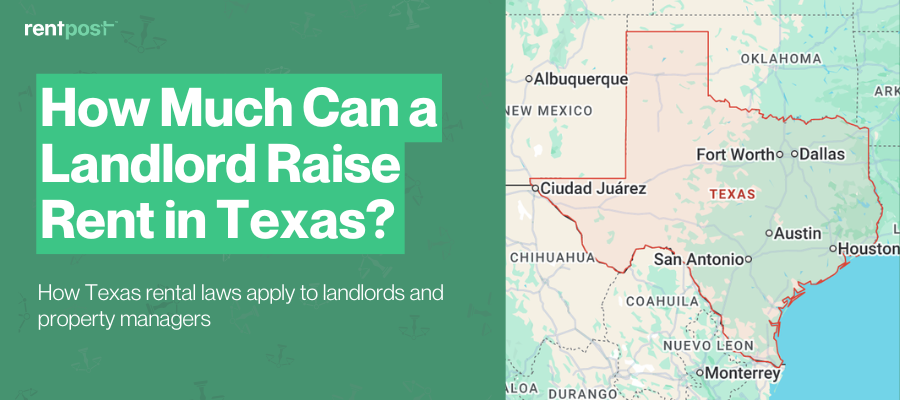
There is no statewide maximum rent increase allowed in Texas for most private residential rentals. Texas does not have rent control laws that cap increases at a specific percentage when a lease is renewed.
For example, if the current monthly rent is $1,500, Texas law does not automatically prevent a landlord from increasing it to $1,650, $1,800, or another amount at renewal.
However, having no statewide percentage cap does not mean every rent increase is automatically legal. A landlord must still follow the existing lease, provide any required notice, and comply with laws protecting tenants from retaliation and housing discrimination.
If you want to understand how these rules differ across the country, see our guide on how much and how often rent can be raised.
Tenants should therefore review both the amount of the increase and when and why the increase is being imposed before determining whether it is permitted.
What Is the Maximum Rent Increase Allowed in Texas?
There is no statewide maximum rent increase allowed in Texas for most private residential rentals. Texas does not have rent control laws that cap increases at a specific percentage when a lease is renewed.
For example, if the current monthly rent is $1,500, Texas law does not automatically prevent a landlord from increasing it to $1,650, $1,800, or another amount at renewal.
However, having no statewide percentage cap does not mean every rent increase is automatically legal. A landlord must still follow the existing lease, provide any required notice, and comply with laws protecting tenants from retaliation and housing discrimination.
Tenants should therefore review both the amount of the increase and when and why the increase is being imposed before determining whether it is permitted.
How Often Can a Landlord Raise Rent in Texas?
Texas does not set a statewide rule limiting rent increases to once per year. How often rent can be changed primarily depends on the lease.
For a fixed-term lease, such as a 12-month lease, the landlord and tenant are generally bound by the agreed rent for the duration of the lease. The landlord cannot simply change the lease terms during that period unless the lease permits the change or both parties agree. If you are unsure how these terms work, our guide explaining what a lease agreement is covers the key provisions landlords and tenants should understand.
For a month-to-month tenancy, a landlord can change the rent after giving the required notice. Because the tenancy renews monthly, rent increases are not restricted to once per year, although the landlord must follow the notice requirements each time the terms are changed.
Landlords and tenants considering this type of arrangement can also review the pros and cons of a month-to-month lease to understand how its flexibility affects rent changes and tenancy terms.
Always check the lease first, as it may include additional notice requirements or terms governing rent adjustments.
How Much Notice Is Required for a Rent Increase in Texas?
The amount of notice required for a rent increase in Texas depends on the rental agreement and type of tenancy.
For a month-to-month tenancy, TexasLawHelp states that a landlord must provide 30 days’ notice before changing the lease terms, including the amount of rent.
For a fixed-term lease, the landlord generally cannot change the agreed rent during the lease unless the lease allows the change or the tenant agrees to an amendment. A higher rent is more commonly introduced when the existing lease expires and a new lease or renewal is offered.
The lease may also require additional notice before renewal or before changes to rental terms take effect, so both landlords and tenants should review the agreement carefully.
Can a Landlord Raise Rent More Than 10% in Texas?
Yes. A landlord can generally raise rent by more than 10% in Texas because the state does not impose a statewide percentage cap on rent increases for most private rentals.
For example, increasing monthly rent from $1,500 to $1,700 is an increase of approximately 13.3%. Texas law does not make the increase illegal simply because it exceeds 10%.
The same principle applies to large dollar increases. If you are specifically dealing with a significant increase, see our guide answering whether a landlord can raise rent by $300.
What matters is whether the increase follows the lease and applicable law. A rent increase may still create legal problems if it is imposed during a fixed-term lease without authorization, introduced without the required notice, used as unlawful retaliation, or based on prohibited housing discrimination.
Therefore, tenants should not judge the legality of an increase based only on its percentage.
When Is a Rent Increase Illegal in Texas?
Although Texas does not cap the amount of most rent increases, there are circumstances in which a landlord may not be able to legally impose an increase.
For a broader explanation of rental protections, responsibilities, and regulations in the state, see our guide to Texas landlord-tenant rights.
Rent Increase During a Fixed-Term Lease
A lease is a contract between the landlord and tenant. During a fixed-term lease, neither party can generally change its terms without agreement from the other party.
This means a landlord normally cannot raise the agreed rent halfway through a 12-month lease simply because market rents have increased. An exception may apply if the lease itself contains a valid provision allowing the rent to change under specified circumstances.
Retaliatory Rent Increase
Texas law protects tenants from certain forms of landlord retaliation.
For example, a landlord generally cannot increase a tenant’s rent as retaliation because the tenant made a good-faith repair request, filed a complaint with an appropriate government agency, exercised a right under the lease or law, or participated in a tenant organization.
Texas retaliation protections generally apply for six months after a qualifying protected action, although exceptions can apply. A scheduled increase or an increase applied consistently to other tenants may not constitute retaliation.
Discriminatory Rent Increase
A landlord cannot impose different rental terms because of a tenant’s protected status under applicable fair housing laws.
Federal and Texas fair housing protections include race, color, national origin, religion, sex, familial status, and disability. Local laws may provide additional protections in some Texas cities or counties.
For example, charging one tenant higher rent solely because of a protected characteristic could violate fair housing law even though Texas otherwise has no statewide rent cap.
Subsidized and Regulated Housing
Different rules may apply to tenants participating in government-subsidized or otherwise regulated housing programs.
Rent calculations, increases, approvals, and notice requirements for these properties may be governed by federal or program-specific regulations rather than the rules that normally apply to private-market rentals.
Tenants in subsidized housing should check the rules of their specific housing program before assuming that Texas’s general no-cap rule applies.
How Can Landlords Manage Rent Increases and Rent Collection?
Managing properties and collecting rent can be a real headache, but the right software takes a lot of that stress away. It makes the whole process faster, smoother, and easier for everyone involved, i.e., property managers, landlords, and even tenants.
As one property manager put it on Reddit, “I’m a full time property manager with my own rentals. I tried doing my own properties manually and completely messed it all up. Tracking income and expenses is time consuming without software. Maintenance tracking is also huge. Long term record keeping and document management are other needs to have aspects that software will give you.”
A Reddit user summed it up perfectly when they shared their experience with a PMS: “Property management software saves so much time by automating tasks like rent collection and maintenance requests, plus it helps cut errors with better tracking and reports.”
Property management software turns a complicated job into a simple one. It streamlines tasks, minimizes headaches, and creates smoother relationships between landlords and tenants.
No matter the size of your portfolio, it keeps everything organized and stress-free.
How RentPost Helps Manage Your Rental Property and Rent Collection?
RentPost helps manage your rental property and rent collection. One user also says, “It’s streamlined for landlords who want easy rent collection, task management, and QuickBooks integration. Works well for scaling without getting too complicated.”
If you’re new to RentPost, here’s an overview of what this cloud-based property management tool can do:
- Real-Time Payment Tracking: With RentPost, easily track rent payments and outstanding balances in real-time with the status of each payment just a click away.
- Tenant Screening: Rent out your property to only trustworthy tenants after end-to-end screening that includes thorough background checks, credit checks, eviction history, identity verification, and more.
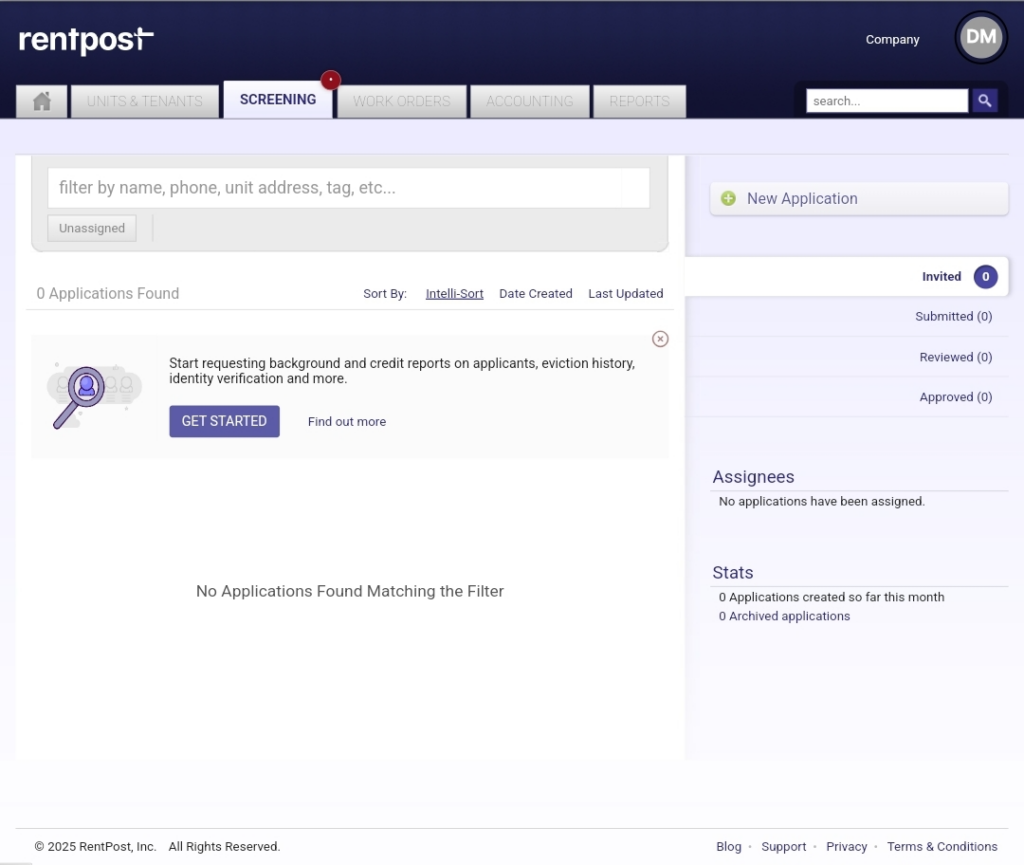
- Scalability: Add new units and tenants as your rental portfolio grows, and scale your business with minimal effort.
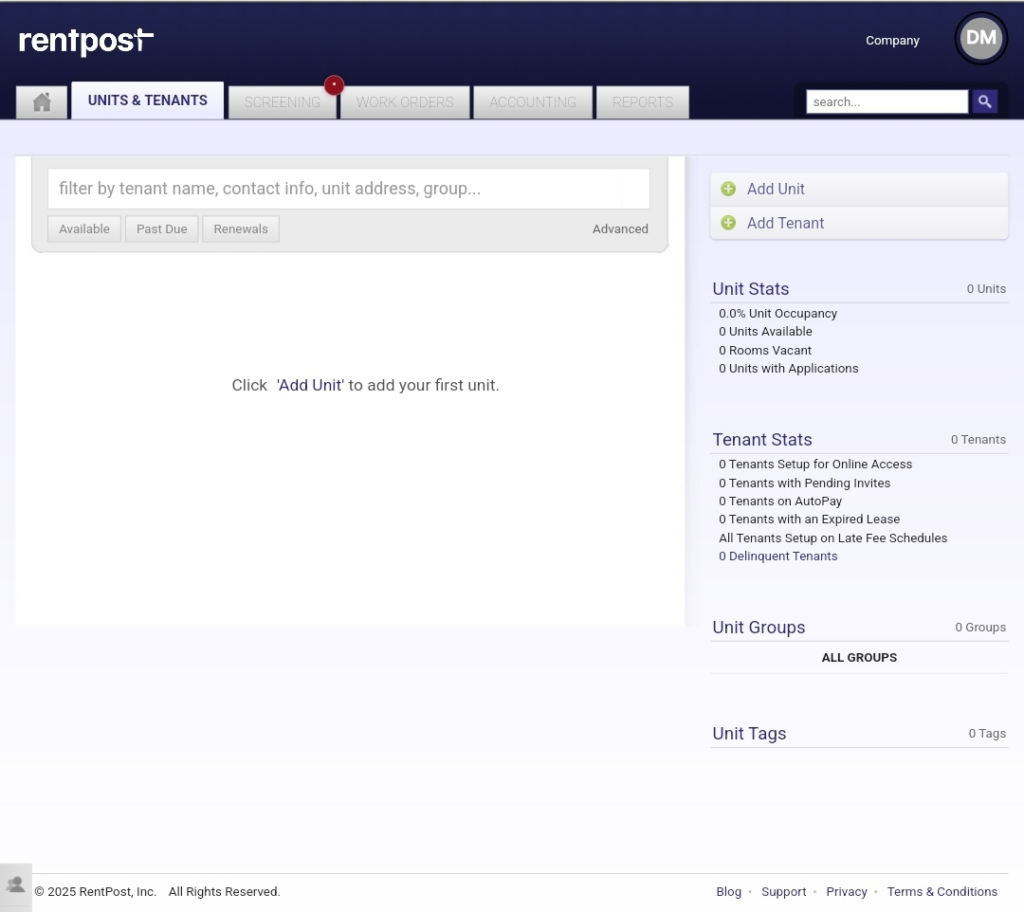
- Automated Payment Reminders: Automated payment reminders mean no more late rent payments. The PMS automatically calculates and applies late fees based on the schedules you define, so you never have to chase payments again.
- Work Order Management: Save time and money by streamlining work orders with RentPost. Accept maintenance requests from tenants, assign them to the respective maintenance personnel or managers, and the tool will take care of the rest.
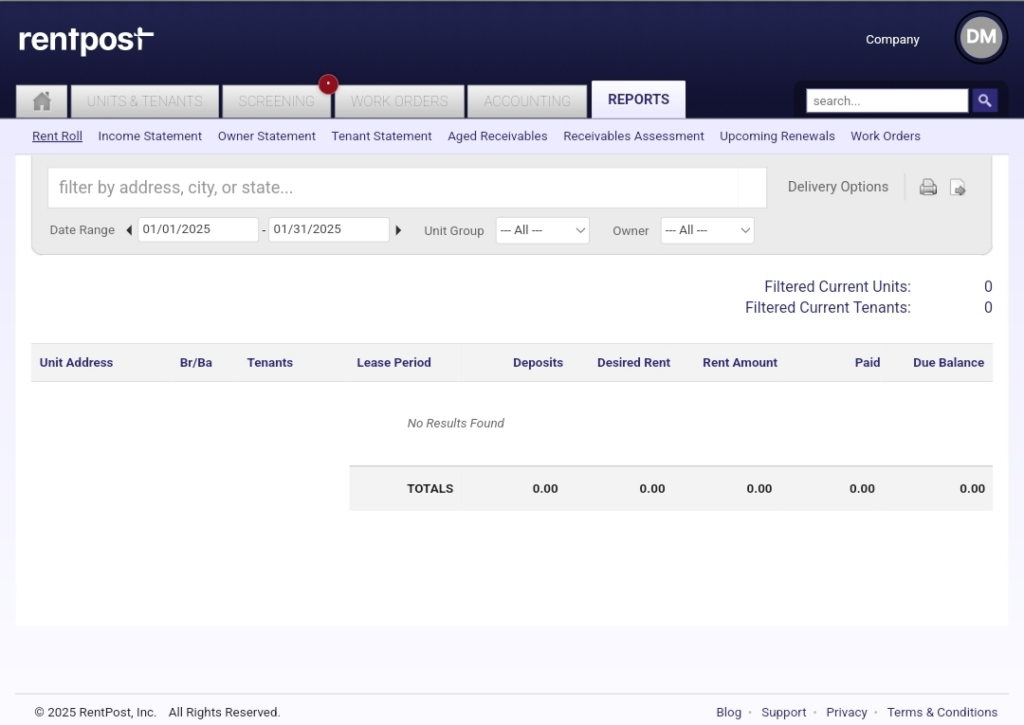
- Financial Report Generation: Get valuable insights into your apartment’s finances through income and expense reports. Identify the right time to adjust rent prices based on your property’s performance.
Explore rent laws in other regions of the US:
- How much can you raise rent in California?
- How Much Can You Raise Rent in New Jersey?
- How Much Can You Raise Rent In Florida?
- How much can you raise rent in NYC?
- How Much Can You Raise Rent in Oregon?
- How Much Can You Raise Rent in Los Angeles?
- How Much Can You Raise Rent in San Diego?
- How Much Can You Raise Rent in Pennsylvania?
- How Much Can You Raise Rent in Massachusetts?
- How Much Can You Raise Rent in Chicago?
- How Much Can You Raise Rent in Illinois?
- How Much Can You Raise Rent in Maryland?
- How Much Can You Raise Rent in Michigan?
- How Much Can You Raise Rent in Seattle?
Raise Rent in Texas: FAQs
Is There Rent Control in Texas?
No, Texas doesn’t have rent control. A landlord can raise rent as much as they want, as long as the lease allows it and proper notice is given. The state believes in a free market system, so rent amounts are left to landlords and tenants to agree on without government limits.
Is Texas a Landlord-Friendly City?
Texas is often called landlord-friendly because laws give landlords strong rights in evictions and rent setting. Eviction timelines are usually quick, and there’s no rent control. Tenants still have rights to safe housing and fair treatment, but the balance is more toward landlords compared to states with stricter rental rules.
Do Rent Increase Laws Apply to All Types of Properties in Texas?
Rent increase rules in Texas apply to most rental homes and apartments. Since there’s no statewide rent cap, landlords of houses, duplexes, and apartments can raise rent with proper notice. However, government-subsidized housing or Section 8 programs do have stricter rules, and landlords in those programs must follow federal or local guidelines.
Are There Exceptions to the Rent Cap in Texas?
In Texas, the only exceptions involve subsidized housing, where federal rules apply. Cities and counties also cannot create their own rent control unless the state gives permission, which has not happened. So in most cases, landlords are free to set the rent.
Can My Landlord Raise My Rent by $300 in Texas?
Yes, a $300 rent increase can be legal in Texas because there is no statewide limit on the dollar amount or percentage by which rent can increase for most private rentals.
For example, increasing rent from $1,500 to $1,800 would be a 20% increase, but the size of the increase alone would not make it illegal. The landlord must still follow the lease, applicable notice requirements, and laws concerning retaliation and discrimination.
Can My Landlord Raise My Rent After I Ask for Repairs?
A landlord cannot legally increase rent simply to retaliate against a tenant for making a qualifying good-faith repair request.
Texas law provides retaliation protections for certain tenant actions, including requesting necessary repairs, filing certain complaints, participating in tenant organizations, or exercising rights provided by the lease or law.
However, not every increase following a repair request is retaliation. For example, a previously scheduled increase or one applied consistently across comparable units may still be permitted.
Can Rent Be Increased During a 12-Month Lease in Texas?
Generally, a landlord cannot unilaterally raise the agreed rent during a fixed 12-month lease.
The lease remains a binding contract until it expires unless both parties agree to change it or the lease already contains a provision that permits a rent adjustment under specified circumstances.
Once the lease expires, the landlord may offer a renewal at a higher rental rate.
What Can Tenants Do if They Cannot Afford a Rent Increase?
A tenant who cannot afford a proposed increase can first try negotiating with the landlord. A longer renewal term, reliable payment history, or comparison with similar nearby rentals may provide useful grounds for requesting a smaller increase.
If an agreement cannot be reached, the tenant may choose not to renew the lease and move when the tenancy legally ends.
Tenants who believe the increase violates their lease or is retaliatory or discriminatory should document the notice and relevant communications and consider seeking qualified legal assistance.
Author