Log in
 Free Trial
 karina
  5174 views
  5
5
A strong landlord-tenant relationship helps create a smooth and stress-free rental experience. Clear tenant communication and mutual respect improve tenant relations and reduce common issues like late payments, maintenance delays, and misunderstandings.
Both landlords and tenants must follow clear rules, keep communication open, and respect each other’s responsibilities. When both sides work together, the landlord and tenant relationship becomes more stable, professional, and easy to manage.
In this guide, we share simple and practical tips to improve landlord-tenant communication, build trust, and maintain long-term rental relationships.
This article is updated for 2026 and includes the latest rules and regulations related to landlord-tenant laws in the USA.
👉 Start building better landlord-tenant relationships with our tenant screening tools. Begin your 30-day free trial now.
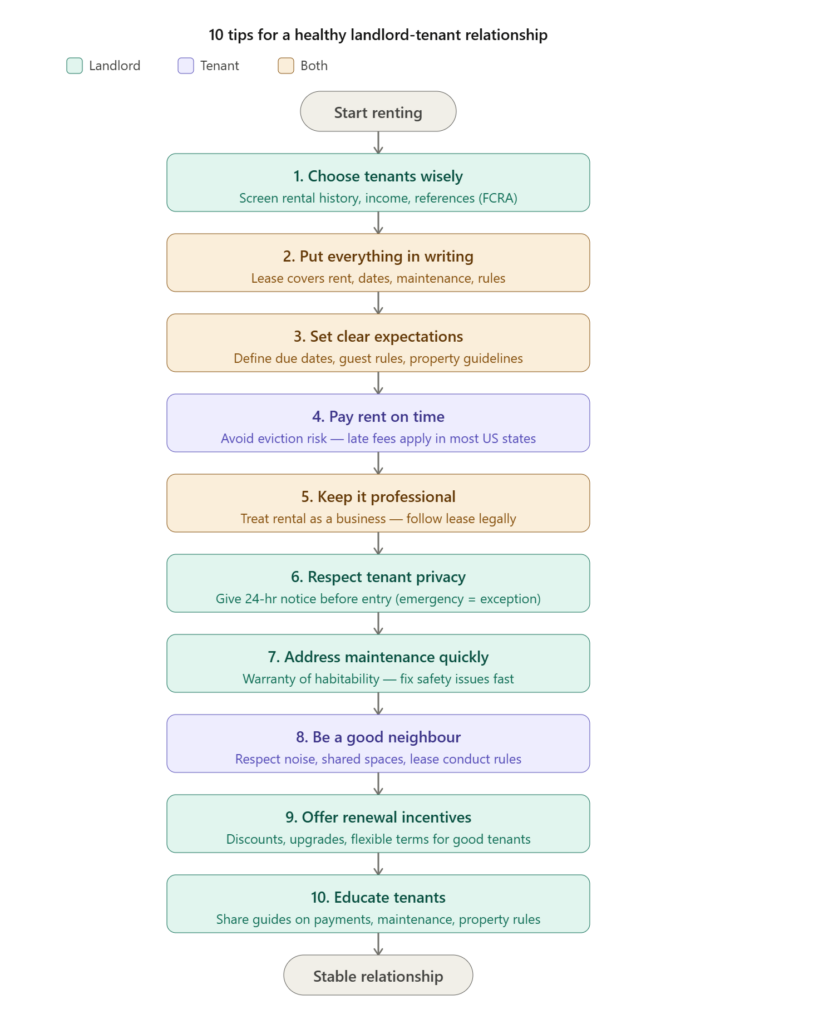
10 Tips to Manage a Healthy Landlord-Tenant Relationship
A strong landlord-tenant relationship helps both sides avoid stress and manage rental issues easily. Good tenant communication plays a key role here. When landlords and tenants communicate clearly, they can solve problems faster and build trust over time.
Clear expectations, written agreements, and mutual respect help improve tenant relations and reduce conflicts. Studies show that clear communication and defined responsibilities help avoid misunderstandings and keep rental experiences smooth.
This section shares simple and practical tips for both landlords and tenants. These tips focus on improving landlord-tenant communication, setting clear rules, and handling issues quickly. When both sides follow these best practices, they can maintain a stable and professional rental relationship with fewer disputes.
1. Choose Tenants Wisely
Who this is for: Landlord
Choosing the right tenant builds a strong landlord tenant relationship from the start. A reliable tenant helps improve tenant relations, pays rent on time, and follows property rules. This reduces future conflicts and keeps the rental process smooth.
Landlords should use a proper screening process. This includes checking rental history, income, and references to understand if the tenant is a good fit. A clear process also makes the tenant landlord relationship more professional and transparent.
At the same time, landlords must follow legal rules in the US. Under the Fair Credit Reporting Act (FCRA), landlords must get written permission before running any credit or background check. They must also use the report only for rental decisions.
If a landlord rejects an applicant based on a report, they must inform the tenant and share details of the report provider. Tenants also have the right to request a copy and correct errors if needed.
Following a fair and legal screening process helps landlords avoid legal issues and build long term renter relations based on trust.
2. Put Everything in Writing
Who this is for: Tenant and Landlord
A written agreement is key to building a strong landlord tenant relationship. It clearly defines the roles, rules, and responsibilities of both sides. This improves tenant communication and helps avoid confusion later.
A lease agreement should include details like rent amount, payment dates, maintenance duties, and property rules. When everything is written, both parties can refer back to it if any issues come up. This makes the tenant-landlord relationship clearer and more professional.
In the US, written agreements also support legal protection. Many states require clear lease terms to handle disputes properly. A written lease acts as proof in case of conflicts about rent, repairs, or eviction.
Tenant screening and rental decisions also connect to written records. Under US law, landlords must follow proper documentation when using reports or making decisions. For example, if a landlord denies an application based on a report, they must provide notice and share details of the report provider.
Keeping everything in writing helps both parties stay accountable. It strengthens tenant relations, reduces legal risks, and ensures a smooth rental experience.
3. Set Clear Expectations
Who this is for: Tenant and Landlord
Clear expectations help build a strong landlord-tenant relationship. When both sides understand the rules from the start, they avoid confusion and improve tenant communication.
Landlords should explain key details before signing the lease. This includes rent due dates, maintenance process, guest rules, and property guidelines. Tenants should also ask questions and confirm all terms. This creates a clear and fair tenant-landlord relationship from day one.
In the US, a lease works as a legal contract. Courts rely on the written agreement to resolve disputes between landlords and tenants.
When expectations are clear, both sides know what to do. This reduces conflicts, improves tenant relations, and makes the rental experience more stable and predictable.
4. Pay Rent on Time
Who this is for: Tenant
Paying rent on time is one of the most important parts of any rental relationship. It helps maintain trust and keeps the landlord tenant relationship stable.
Late payments can create stress and may lead to legal action. In many US states, landlords can start eviction if tenants do not pay rent within the required notice period.
Landlord tenant law allows eviction only through a legal process, which usually starts with written notice. When tenants pay on time, they avoid legal risk and build strong tenant relations with the landlord.
5. Keep the Relationship Professional
Who this is for: Landlord and Tenant
A professional approach helps maintain a clear and fair landlord and tenant relationship. Both sides should treat the rental as a business arrangement.
When boundaries are clear, landlords can make fair decisions and tenants understand their responsibilities better. This reduces emotional conflicts and improves communication.
In the US, lease agreements are legally binding. Both parties must follow the agreed terms, and failure to do so can lead to legal consequences. Keeping things professional helps build long-term relationships and avoids unnecessary disputes.
6. Respect Tenant Privacy
Who this is for: Landlord
Respecting privacy is important for strong tenant relations. Tenants have the right to use their space without unnecessary disturbance.
In the US, landlords must give notice before entering the property. In most cases, this is around 24 hours and must be for valid reasons like repairs or inspections.
Landlords can enter without notice only in emergencies. These rules protect tenant rights and build trust. When landlords follow them, they improve tenant communication and create a better living experience.
7. Address Maintenance Issues Quickly
Who this is for: Landlord
Quick maintenance helps build a strong landlord-tenant relationship. It shows tenants that the landlord cares about their safety and comfort.
Delays in repairs can cause frustration and may lead to bigger problems. Small issues can turn serious if ignored.
In the US, landlords must provide safe and livable housing. This is known as the warranty of habitability. It requires landlords to fix serious problems that affect health or safety. Fast action improves tenant communication and helps maintain trust.
8. Be a Good Neighbour
Who this is for: Tenant
Tenants should respect neighbours to maintain good tenant relations. Noise, waste, or rule violations can create complaints and damage the rental relationship.
Most lease agreements include rules about noise levels, shared spaces, and behavior. These rules are legally binding once signed. Following these rules helps maintain a peaceful environment and improves the overall landlord tenant relationship.
9. Offer Renewal Incentives
Who this is for: Landlord
Offering incentives helps build strong renter relations and keeps good tenants for a longer time. When tenants feel valued, they are more likely to renew the lease, follow rules, and maintain the property properly.
Simple incentives like small rent discounts, flexible renewal terms, or minor upgrades can improve trust. These actions strengthen the landlord-tenant relationship and reduce the need to find new tenants, which saves time and costs.
In the US, any change in rent or lease terms must follow state laws and proper notice periods. Lease agreements act as legal contracts, so landlords must clearly communicate any updates before renewal.
When landlords reward responsible tenants, they create a stable and long term tenant relationship with fewer disputes.
10. Educate Tenants with Updates and Guides
Who this is for: Landlord
Educating tenants improves tenant communication and reduces common issues. When tenants understand rules and processes, they make better decisions and avoid mistakes.
Landlords can share simple guides, instructions, or updates about maintenance, payments, and property rules. This helps tenants report issues early and follow the correct steps.
Clear communication also supports legal clarity. In the US, written policies and communication help prevent disputes and provide proof if any issue arises under landlord-tenant law.
When landlords focus on educating tenants, they improve tenant relationship management, reduce conflicts, and create a smoother rental experience for both sides.
👉 Download Your Free Landlord Tenant Checklist (2026 Updated)
Get a simple, ready-to-use checklist to improve tenant communication, avoid disputes, and stay legally compliant.
Landlord-Tenant Relationship: Common Tenant Complaints
Landlord-tenant disputes usually arise when something goes wrong with the following:
- Work orders
- Tenant privacy
- Lack of assistance with inquiries
- Rudeness from the landlord
- Nearby tenants
- Deposit reimbursement
1. Respond to Work Orders on Time
What’s the complaint: Unanswered or delayed response to repair or maintenance requests
How to prevent conflict: Continuously respond to work orders, even simply saying, “We have received the request.”
Additional tips for Landlord/Tenant: Set clear response timelines in the lease, such as responding within 24–48 hours for non urgent issues. This sets expectations and reduces complaints. Maintenance delays are one of the most common tenant issues, so clear timelines help avoid conflict.
2: Tenant privacy: Communicate Before Entering the Property
What’s the complaint: Non-communication regarding when the landlord or service personnel will be entering a renter’s dwelling
How to prevent conflict: Landlord MUST have confirmation that a tenant has been notified 24 hours ahead of time – voicemail does not count.
Additional tips for Landlord/Tenant: Always mention the reason for entry along with date and time. This makes tenants more comfortable and improves tenant communication.
3: Support Tenants Beyond Basic Duties
What’s the complaint: Ignoring tenant inquiries that are not part of the landlord’s contracted duties
How to prevent conflict: Landlord or property management team can demonstrate goodwill by offering to assist tenants in small, meaningful ways.
Additional tips for Landlord/Tenant: Create a simple welcome guide with important contacts and instructions. This reduces repeated questions and improves overall tenant relations.
4. Maintain Respectful Communication
What’s the complaint: Some landlords may come across as rude to tenants by being short when responding to requests, acting impatient when hearing concerns, or making overly harsh statements in tense situations.
How to prevent conflict: Landlords should carefully listen to understand tenants’ perspectives, speak and write professionally using a neutral, respectful tone, and try seeing issues from tenants’ point of view.
Additional tips for Landlord/Tenant: Keep written records of important conversations. This helps avoid misunderstandings and provides clarity if any dispute arises.
5. Handle Neighbor Complaints Properly
What’s the complaint: Some tenants, unfortunately, disturb neighbours by playing loud music, having raucous gatherings, letting pets run loose, or making excessive noise.
How to prevent conflict: Landlords should directly but diplomatically address the problem with the offending tenant. The landlord can cite relevant lines from the lease around quiet enjoyment and offer concrete solutions like keeping music low after 10 pm or hosting fewer guests.
Additional tips for Landlord/Tenant: Act early before the issue becomes serious. Most noise or behaviour complaints can be resolved quickly with a simple warning instead of legal action.
6. Security Deposit Issues
What’s the complaint: Problems around security deposit returns often arise at lease end due to unclear documentation of preexisting conditions versus new damages.
How to prevent conflict: Establishing expectations from the outset via documented walkthroughs and a clear understanding of normal wear-and-tear versus tenant negligence helps mitigate deposit conflicts down the road.
Additional tips for Landlord/Tenant: Keep clear documentation and share an itemized list of deductions. Only charge for actual damage, not normal wear and tear.
In the US, security deposit rules vary by state, but landlords must follow clear guidelines on deductions and return timelines. Most states require deposits to be returned within a set period and allow deductions only for unpaid rent or damage beyond normal use.

Landlord Tenant Relationship: Common Landlord Complaints
Landlords often face common issues that affect the landlord-tenant relationship and create stress in daily operations. Most problems come from poor tenant communication, unclear expectations, or failure to follow lease terms.
Here are the most common complaints landlords face and how to handle them.
1. Non-payment or Late Payment of Rent
What’s the complaint: Late or unpaid rent affects cash flow and creates tension in the rental relationship. It also forces landlords to spend time and effort on follow-ups or legal action.
How to prevent conflict: Landlords should clearly set rent due dates and payment methods in the lease. Tenants should treat rent as a priority and inform the landlord early if any issues come up.
In the US, landlords must follow a legal process before eviction. This usually includes giving written notice for non-payment before taking further action.
Additional tips: Setting up automatic payments or reminders can help tenants pay on time. Small incentives for early payment can also improve habits and strengthen tenant relations.
2. Poor Property Maintenance
What’s the complaint: Unreported or ignored issues like leaks, broken appliances, or pest problems can affect safety and living conditions. This weakens the landlord-tenant relationship.
How to prevent conflict: Landlords should create a clear system for reporting issues and respond within a reasonable time. Tenants should report problems early instead of waiting.
Landlords must provide safe and livable housing. This is known as the warranty of habitability, which requires fixing serious issues that affect health or safety.
Additional tips: Regular inspections and preventive maintenance can reduce complaints. Quick response also improves tenant communication and trust.
3. Lack of Tenant Responsiveness
What’s the complaint: Tenants may ignore messages or delay reporting problems. This can make small issues worse and affect property condition.
How to prevent conflict: Landlords should provide simple and clear ways to communicate, such as phone, email, or tenant portals. They should also respond quickly to build trust. A lease agreement requires both parties to follow responsibilities. Ignoring communication can lead to issues that may affect lease compliance under landlord-tenant law.
Additional tips: Regular check-ins and clear instructions can improve tenant communication and reduce delays.
4. Excessive Noise
What’s the complaint: Noise from parties, music, or pets can disturb neighbours and create complaints. This affects overall tenant relations in the property.
How to prevent conflict: Landlords should include clear noise rules in the lease and explain quiet hours. Tenants should respect shared spaces and neighbours. Lease agreements often include rules for peaceful living. Violating these rules can lead to warnings or legal action if repeated.
Additional tips: Address issues early and communicate clearly with tenants to avoid escalation.
5. Illegal Tenant Activity
What’s the complaint: Illegal activities like violence, drug use, or property damage can create serious safety concerns and damage the landlord-tenant relationship.
How to prevent conflict: Landlords should clearly state zero-tolerance policies in the lease. If any illegal activity occurs, they must take action quickly. In the US, landlords must follow legal eviction procedures even in such cases. They may need to issue notices and involve authorities depending on the situation.
Additional tips: Act quickly, document incidents, and follow legal steps to protect the property and other tenants.

Landlord-Tenant Relationship: Acts and Laws
Many state and local municipalities have specialized regulations, but most laws define the rights, responsibilities, and procedures for both landlords and tenants. These laws usually cover deposits, maintenance, discrimination, safety standards, and lease terminations.
Here are some key federal, state, and local laws in the US governing the tenant-landlord relationship:
- Fair Housing Act (FHA) – Prohibits discrimination in rental housing based on race, color, national origin, religion, sex, disability, or family status. This law ensures equal access to housing and protects tenant rights across the US.
- Fair Credit Reporting Act (FCRA) – Regulates how landlords collect and use tenant credit information during screening. Landlords must obtain permission before running credit checks and must follow proper procedures when rejecting applicants.
- Uniform Residential Landlord and Tenant Act (URLTA) – A model law adopted by many states. It outlines lease agreements, landlord duties, tenant rights, and eviction procedures. It helps create a structured framework for the landlord-tenant relationship.
- Warranty of Habitability – Requires landlords to provide safe and livable housing conditions. This includes maintaining basic utilities, fixing serious repairs, and ensuring the property meets health and safety standards.
- Good Cause Eviction Laws – Some US states and cities require landlords to give a valid legal reason before evicting a tenant or refusing lease renewal. It protects tenants from unfair removal and sudden rent increases by limiting eviction to specific reasons like non-payment of rent or lease violations.
- State and Local Landlord Tenant Laws – Each state has its own set of rules that govern rental agreements and disputes. Some examples include:
- Hawaii Landlord Tenant Act – Covers security deposits, disclosures, rental agreements, and eviction procedures
- Chicago Residential Landlord and Tenant Ordinance – Covers rent rules, deposits, and tenant protections in Chicago
- New York Housing Laws – Include strong tenant protections related to habitability and eviction
Click here to access key statutes pertaining to landlord-tenant law in each US state.

Our Takeaway
To reiterate, RentPost’s vision is to improve the world of rent and in many situations, the problem areas are interpersonal relationships held between tenants and landlords/managers. One theme remains through all these issues: Respect and proper communication will be the cure-all for your tenant troubles.
Do not handle tenant issues unknowingly by setting the bar at abrasiveness. Handle with care, and watch the community flourish – remember it all starts with YOU, the landlord!
Authors